

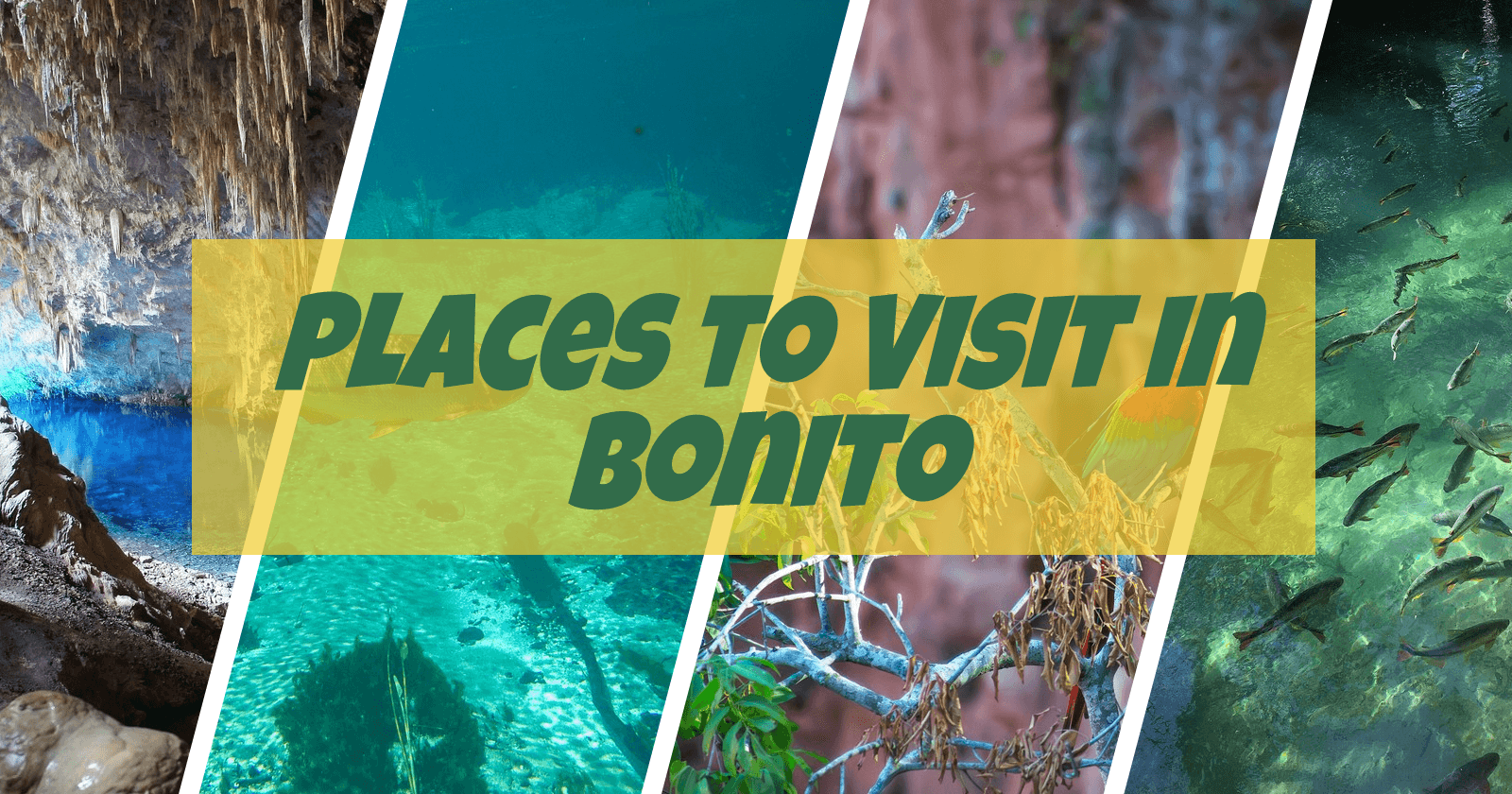
Bonito’s best-known attractions are Gruta do Lago Azul, the Rio da Prata and Rio Sucuri snorkelling floats, the 72-metre abseil into Abismo Anhumas, and the Boca da Onça waterfall circuit. Every one of them must be booked through an accredited agency before you arrive — you cannot turn up and pay at the gate.
Bonito sits in south-west Mato Grosso do Sul, on the eastern flank of the Serra da Bodoquena, about 300 kilometres from Campo Grande. Its rivers are extraordinarily clear, and the reason is geological: the region’s carbonate rocks dissolve into the water, and the dissolved carbonate binds suspended particles into flocs heavy enough to sink and cement to the riverbed rather than staying in suspension.
That clarity is the whole product, and Bonito has built an unusually strict tourism model to protect it. Understanding that model is the first thing any visitor needs.
1. The Voucher System
This is the single most important practical thing about Bonito, and the thing most travellers discover too late. You cannot buy entry at an attraction. Tickets must be purchased from an accredited local travel agency, which issues a Voucher Único naming the visitor, the attraction, the date, the time, the number of places and the responsible guide.
Each attraction has a hard daily visitor cap, and the voucher allocates you a dated, timed slot within it. Since 2021 the voucher has been digital, with check-in by QR code at most sites.
Crucially, the caps are set by the environmental regulator, not the operator. The clearest documented example is the Balneário Municipal, where the state environment institute IMASUL fixes capacity under an environmental licence based on an impact assessment of the Rio Formoso: 1,500 people a day, split 800 free places for Bonito residents and 700 for tourists. That is the only cap figure with an official published source; numbers you will see quoted for the caves and floats come from agencies rather than authorities, so treat them as indicative.
The practical consequence: popular attractions sell out in high season — late December to January, Carnival, July and long weekends. Book before you travel, not on arrival.
Accessibility: Because the agency controls the slot rather than the attraction, access needs must be raised at the point of booking. This is genuinely to your advantage — an agency can match you to sites that will work, and several cannot.
2. Gruta do Lago Azul
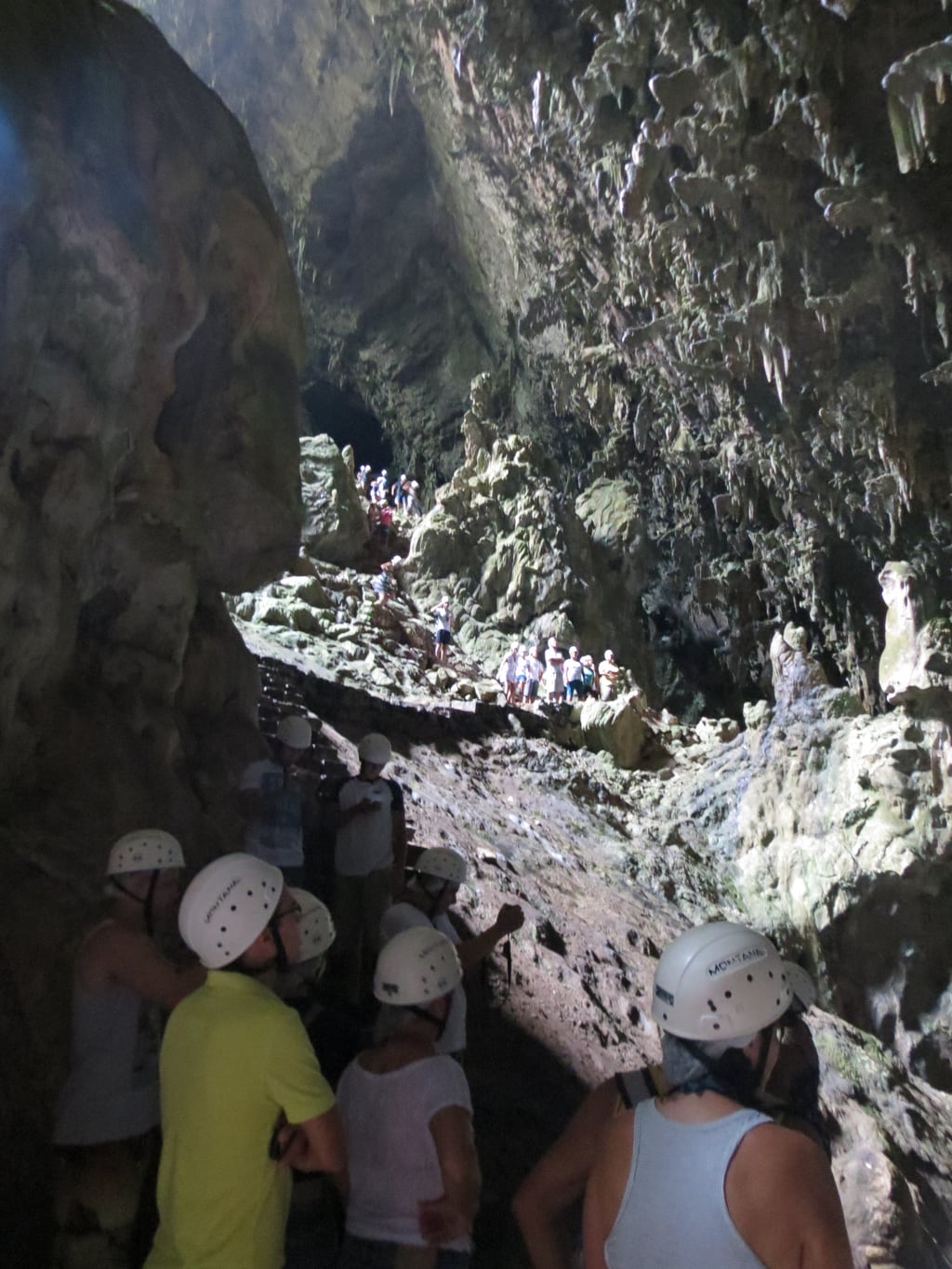
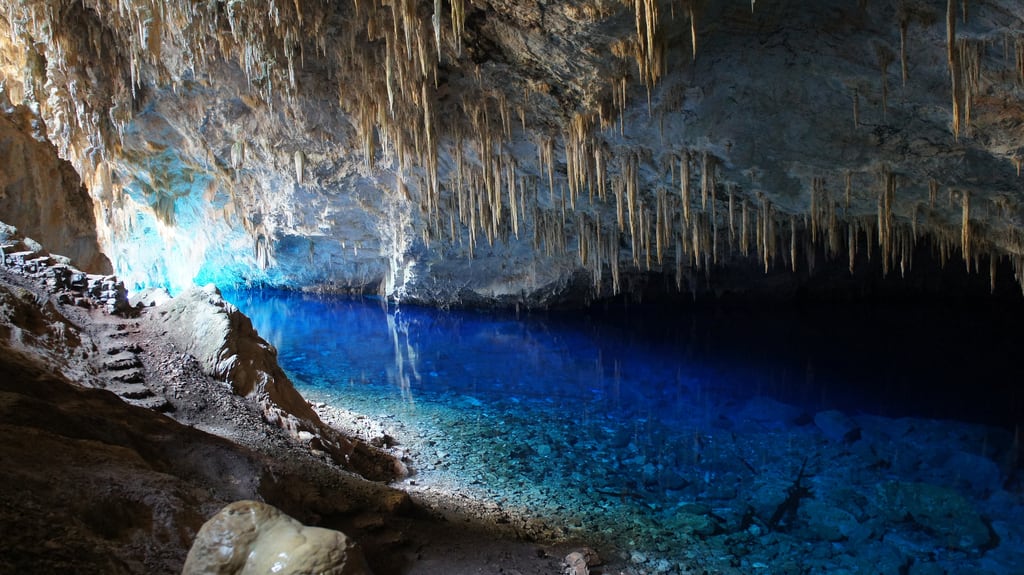
A cave with a deep blue underground lake, 21 kilometres from town, and a contemplative visit only — no swimming, no entering the water. The descent is around 300 steps down roughly 150 metres of vertical drop, so it is a demanding half-day.
The numbers are properly documented. The main chamber measures 224 metres on its longest axis with 150 metres of vertical drop, and is around sixty-five per cent submerged. The visited chamber, the Salão do Lago, is 143 metres long with a ceiling 20 to 25 metres above. The lake is over 90 metres deep; the first exploratory dive, in 1992, reached 55 metres.
Two things almost every guide gets wrong
First, the blue. Tourist sites say it comes from sunlight reflecting off suspended limestone particles. Brazil’s peer-reviewed geosite register states the opposite: the water is completely colourless, and the blue is Rayleigh scattering — the same physics that makes the sky blue. It is both the correct explanation and the better story.
Second, the discovery. You will read that a Terena man found the cave in 1924. The same scientific source says flatly that this has no historical basis and has simply become a legend through repetition. The caves were known locally by around 1940, first described scientifically in 1957, and opened to visitors in 1970.
On the lake floor lie Pleistocene fossils — giant sloth and sabre-toothed cat — identified from underwater imagery. The cave is also the type locality for two blind, unpigmented endemic crustaceans found nowhere else.
The light phenomenon
In the summer months, sunlight reaches the underground lake directly through the cave’s roughly 40-metre-wide entrance, lighting it an intense blue. Local operators put the window at around mid-December to mid-January, early in the morning. That is worth knowing — and worth weighing, because it coincides exactly with the rainy season and the most crowded weeks of the year, when river clarity elsewhere is at its least reliable.
Accessibility: Gruta do Lago Azul is inherently inaccessible: roughly 300 steps down a 150-metre cave, with no lift and no alternative route. No source claims otherwise, and neither do we.
3. The Snorkelling Floats
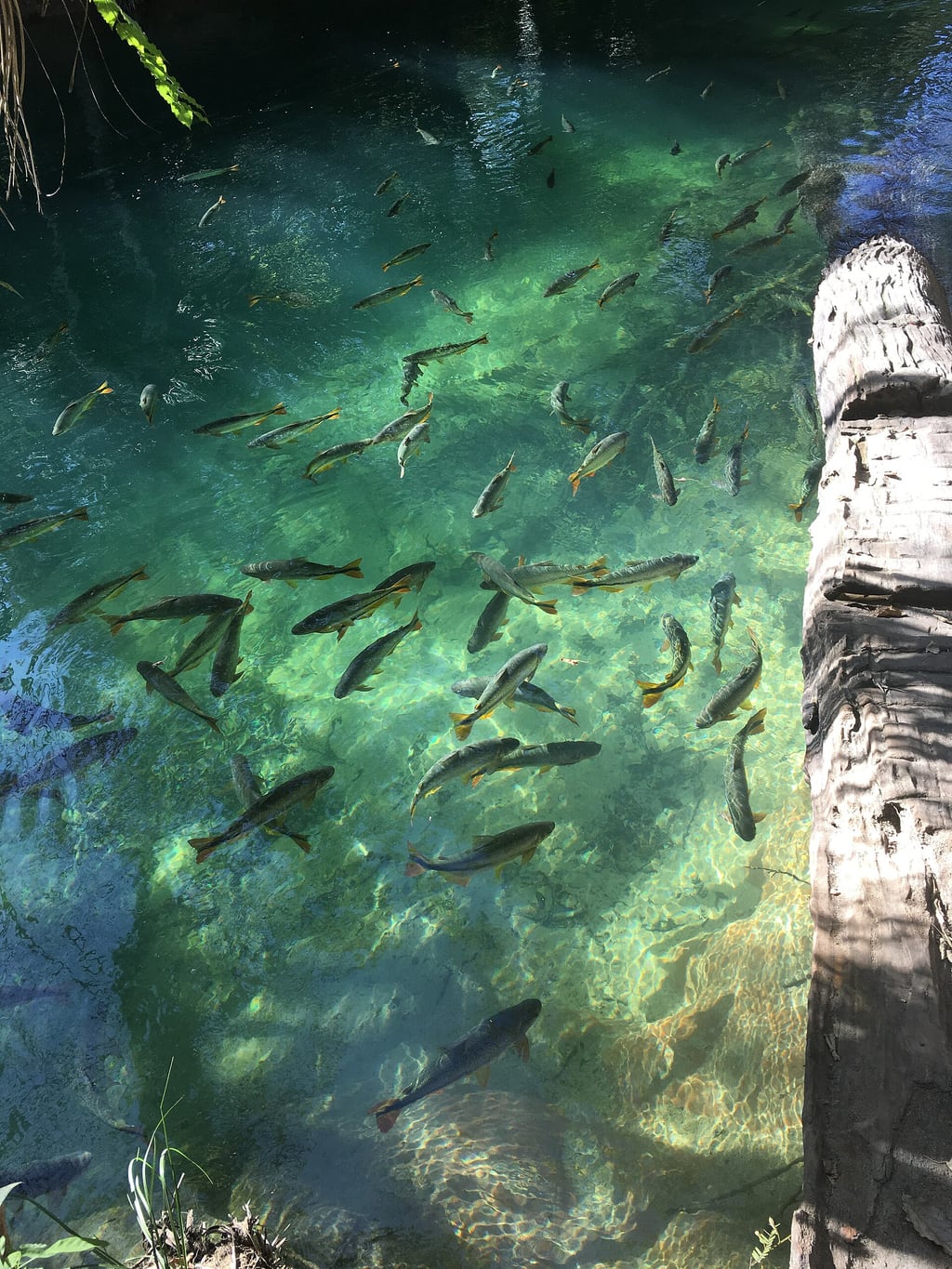
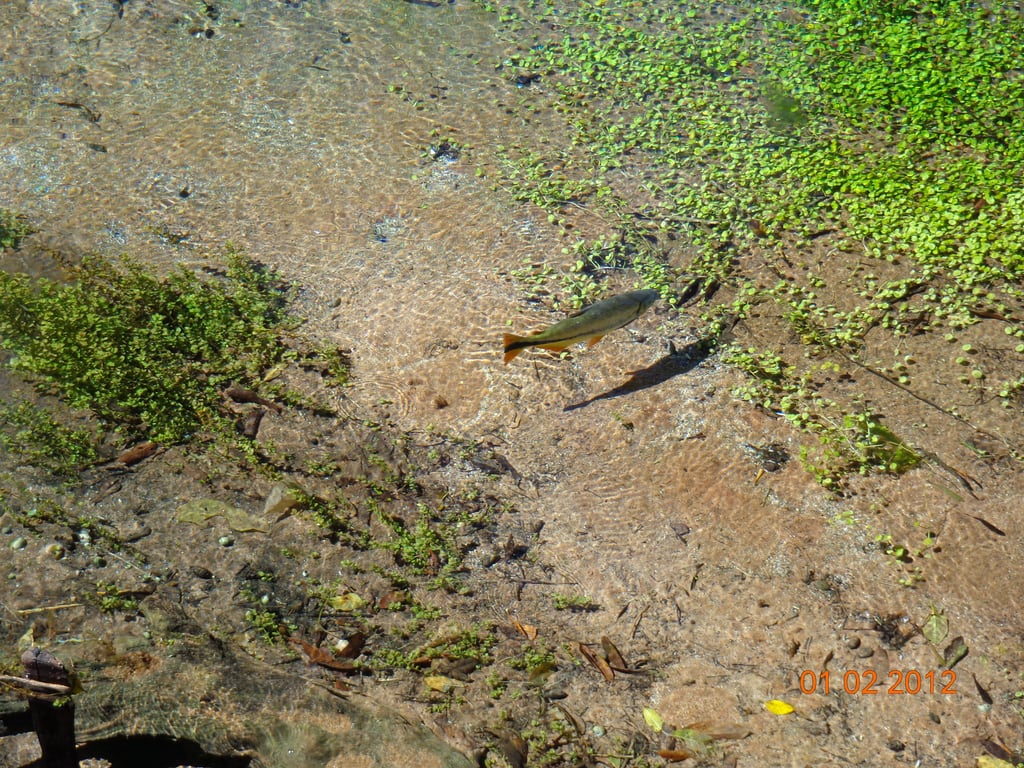
Floating — flutuação — is what Bonito is for. You wear a wetsuit, mask, snorkel and life vest, and drift downstream over shoals of piraputanga, dourado, curimbatá and piau, with a guide throughout and usually a support boat.
| Float | Distance | Distance from Bonito | Notes |
| Rio da Prata | Roughly 2 km in two linked stretches | In Jardim | Also offers a 5–7 m dive with no certification needed; the full visit runs most of a day |
| Rio Sucuri | About 1,800 m | 19 km | A light trail to the springs first; a boat-only option exists if you prefer not to enter the water |
| Aquário Natural | About 900 m | Near town | Starts at the Baía Bonita spring; ~2.5 hours total, about 40 minutes in the water |
| Nascente Azul | Spring roughly 7 m deep | 33 km | Five components including a contemplative trail, a tufa waterfall and an adventure park |
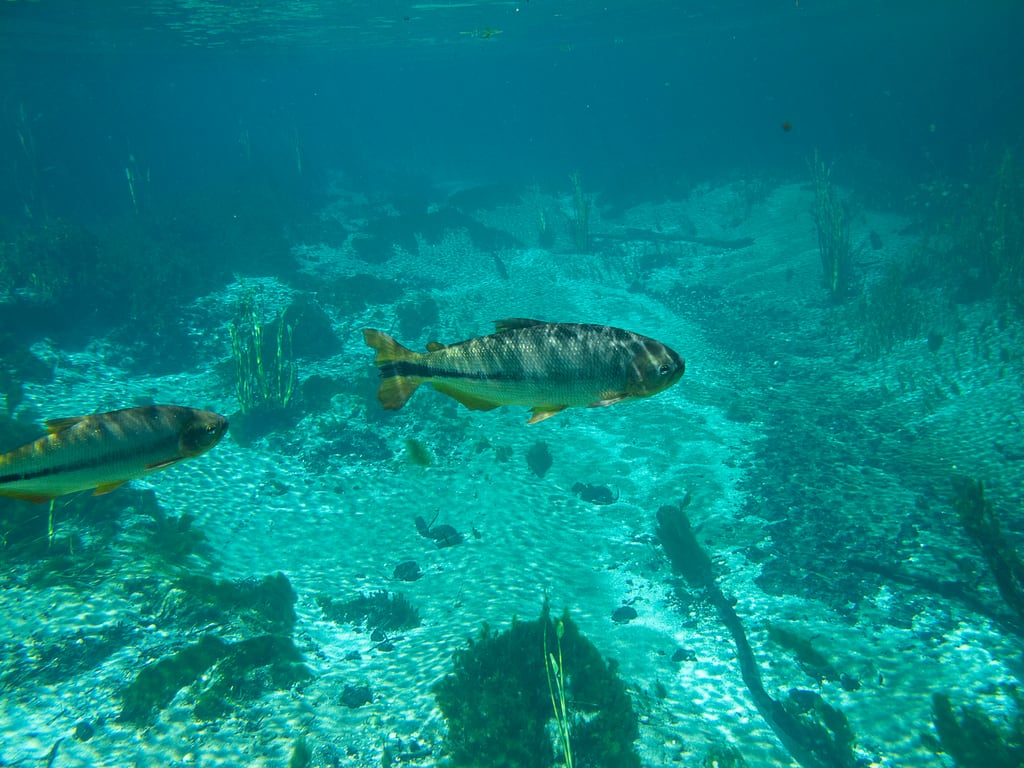
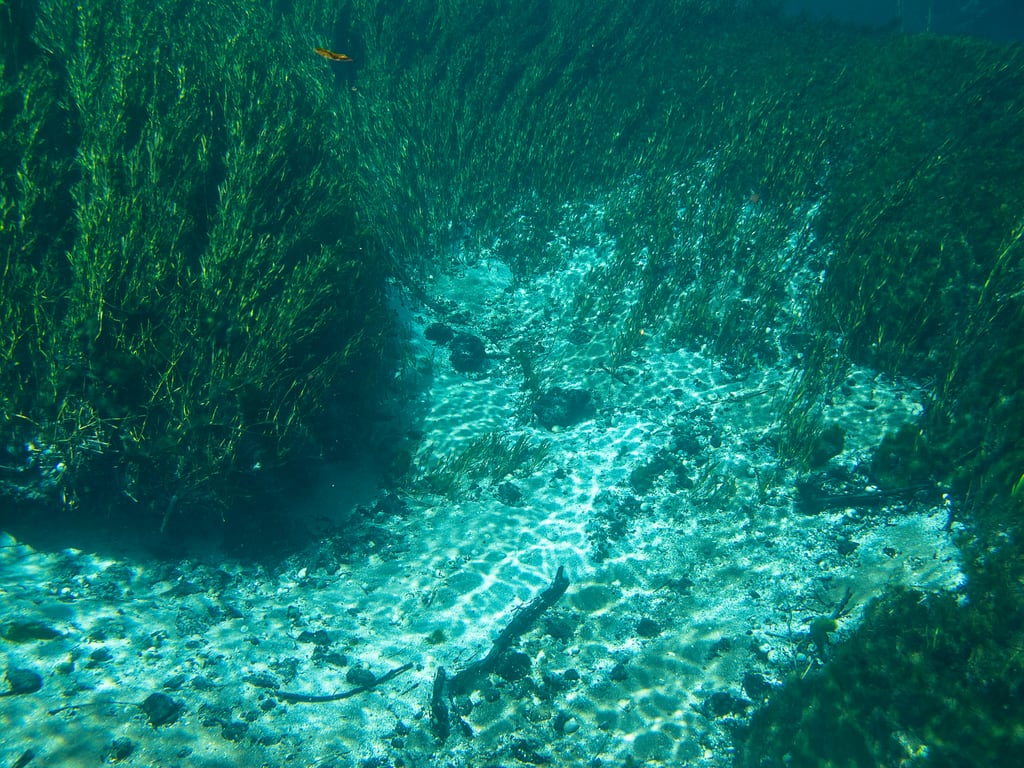
Accessibility: Accessibility varies sharply and the promotional material overstates it. Nascente Azul is the genuine standout: its walkway is flat along almost its entire length and was purpose-designed for wheelchair users and older visitors, with amphibious chairs available for floating. By contrast, an accredited agency’s own access audit states that Rio da Prata has no accessibility and that the Rio Sucuri spring is not wheelchair accessible — both require a companion. Where the state’s promotional material and the agency audit disagree, we would trust the audit.
4. Abismo Anhumas
A 72-metre abseil — about twenty-six storeys — down a shaft into a cave, then a boat across an underground lake 80 metres deep, past formations up to 20 metres tall, followed by snorkelling or scuba. Discovery dives go to 8 metres, certified divers to 18. It is 23 kilometres from Bonito and was found in 1970 after a regional fire.
You will see 77 metres quoted widely. The operator’s own figure is 72, and no source we could find supports 77. You may also read that a compulsory practice session the evening before is required — the descent now runs on a motorised electric rappel system and neither the operator nor the municipal tourism board mentions any prior-day training, so check with your agency rather than assuming.
Accessibility: Anhumas has a suspended walkway that lets wheelchair users reach the rappel deck with assistance from monitors — an unusual and genuinely thoughtful piece of design, given what the activity is.
5. Boca da Onça and Buraco das Araras
Boca da Onça is a full-day waterfall circuit in the Cânion do Rio Salobra, 61 kilometres from Bonito and technically in the neighbouring municipality of Bodoquena. Its headline fall is 156 metres, the tallest in Mato Grosso do Sul, and there is a viewing platform projecting 34 metres over the canyon. The property covers 2,000 hectares with eight accessible waterfalls and bathing spots along the route. A 90-metre abseil, billed as Brazil’s tallest, runs separately.
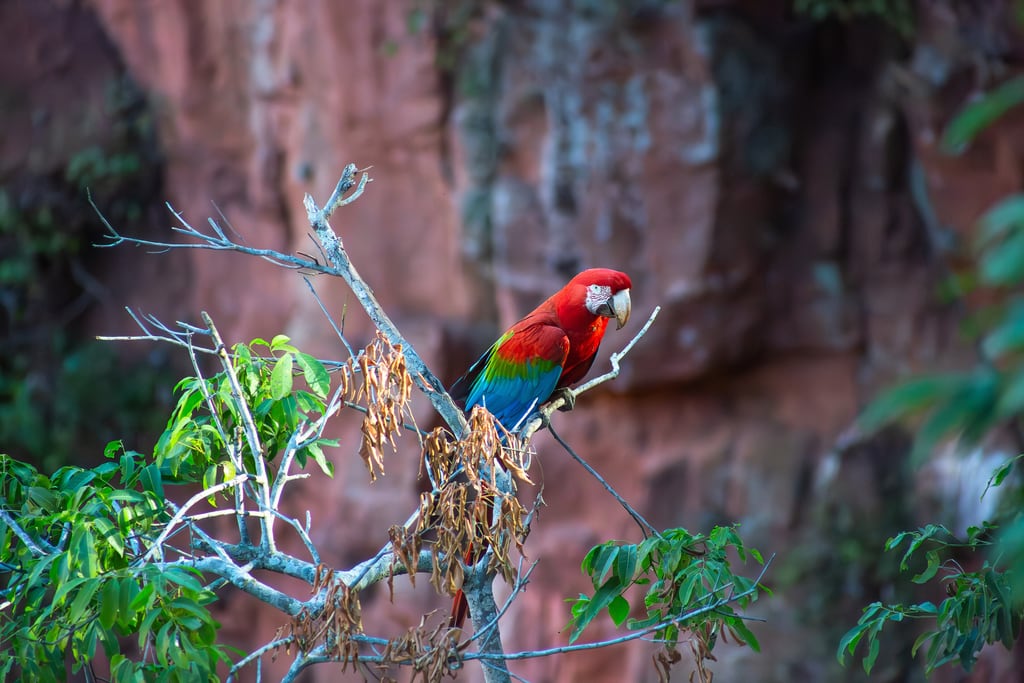
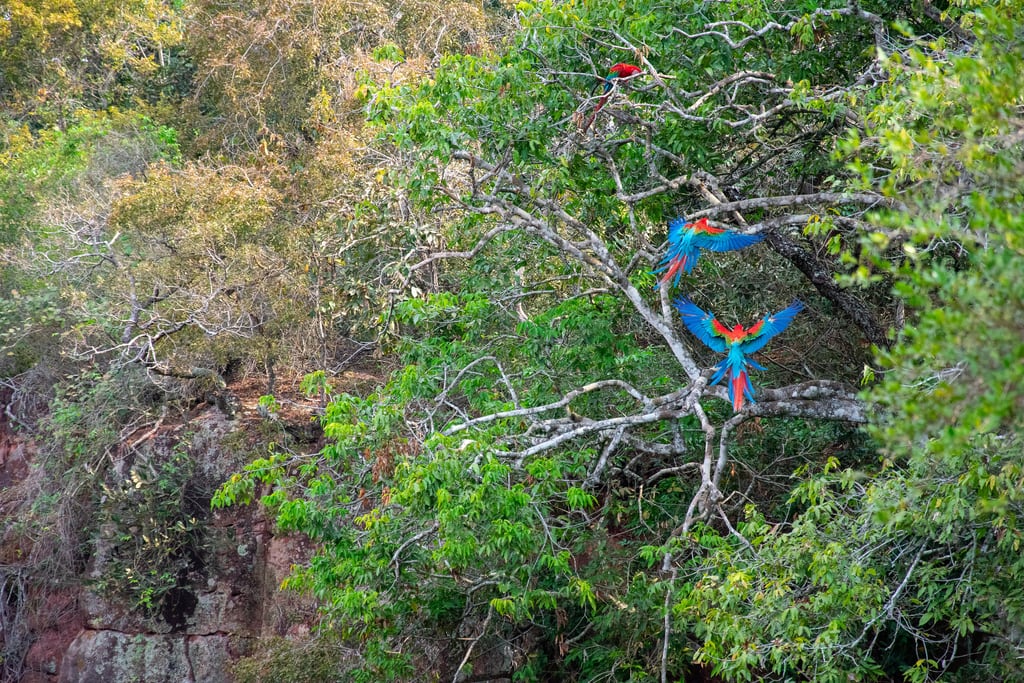
Buraco das Araras, 53 kilometres away in Jardim, is an enormous sinkhole — roughly 100 to 125 metres deep and around 500 metres in circumference — where red-and-green macaws nest in the walls. It is a private natural heritage reserve of 29 hectares, protected by federal decree since 2007 and adjoining the much larger Rio da Prata reserve. Go early or late, when the birds are flying.
6. The Quieter Half of Bonito
The four attractions above absorb most of the demand, which means the rest of the circuit is often the more pleasant day out.
Gruta de São Miguel
A dry cave, 18 kilometres from town, and the natural counterpart to Lago Azul — stalactites, stalagmites and travertines rather than water. It is lit inside, with guides issuing torches, and the approach runs along a suspended bridge through cerrado with a birdwatching viewpoint, returning by electric cart. Trainers are mandatory and backpacks are not allowed inside.
Lagoa Misteriosa
In Jardim, 46 kilometres out, and genuinely one of the world’s notable cave-diving sites. Two numbers circulate and both are correct: the sinkhole itself is about 75 metres deep, while the water column below it has been measured to 220 metres. Visibility exceeds 40 metres. There is a trail-and-float option as well as cylinder and technical diving, so it is not only for qualified divers.
Balneário Municipal
The town’s own river park on the Rio Formoso, staffed by lifeguards with an ambulance on site during opening hours, and the one attraction that does not require a tourist guide. It is also the site with the clearest documented cap — 1,500 people a day, of which 800 places are free for residents — and one of four balneários named as having adapted facilities.
7. Planning the Trip
Getting there. Bonito has its own airport (BYO), about 13 kilometres from the centre, with a handful of weekly flights from São Paulo and Campinas — schedules at a small regional airport change often, so verify before booking. Campo Grande (CGR) is around 300 kilometres away, four to five hours by road, with far more frequencies and usually cheaper fares. Local operators advise against driving the route at night.
When to go. The rainy season runs December to March. Winter, roughly May to September, gives the most reliably clear water. Most tours run through light rain, but heavy summer downpours can cloud the rivers for a day or two — the dry season is the safe bet if underwater visibility is the point of your trip.
How long. Most attractions are half-day and sit 18 to 61 kilometres apart on separate private properties, and operators suggest budgeting about two per day. That arithmetic points to three to five days for the main circuit.
8. Accessibility in Bonito: An Honest Summary
Bonito has made real, state-backed accessibility investments through two named programmes run with the state tourism foundation and the state university. Documented adaptations include amphibious chairs for floating, adapted equipment for boat, kayak and abseil activities, suspended walkways, tactile paving, ramps, adapted toilets and narrated description for blind visitors.
But the provision is concentrated in the balneários — the river bathing parks — rather than the signature caves and floats. Four are named as having adapted facilities: Nascente Azul, Estrela do Formoso, Praia da Figueira and the Balneário Municipal. Several flagship attractions require a companion, at least two explicitly have no wheelchair provision, Gruta do Lago Azul is inherently inaccessible, and no attraction currently offers guides trained in Libras, Brazilian Sign Language.
Accessibility: The single most useful thing you can do is state your access needs to the agency at the moment of booking, because the agency controls the slot and knows which sites will actually work. Do not rely on turning up and asking.
Frequently Asked Questions About Bonito Brazil
Do I need to book Bonito attractions in advance?
Yes. You cannot buy entry at the gate. Every attraction is sold through accredited local agencies, which issue a voucher for a specific date and time within that site’s daily cap. In high season — late December to January, Carnival, July and long weekends — popular sites sell out.
Why is the water in Bonito so clear?
The region’s carbonate rock dissolves into the water. The dissolved carbonate binds suspended particles into clumps heavy enough to sink and cement onto the riverbed, instead of staying suspended and clouding the water.
How deep is the abseil at Abismo Anhumas?
72 metres, roughly twenty-six storeys, onto a lake 80 metres deep. The frequently repeated figure of 77 metres does not match the operator’s own published depth.
When is the best time to visit Bonito?
May to September, the dry winter, gives the most reliably clear water. December to March is the rainy season; heavy rain can cloud the rivers briefly. Note the trade-off: the sunlight phenomenon at Gruta do Lago Azul peaks around mid-December to mid-January, which is also the wettest and busiest period.
Is Bonito accessible for wheelchair users?
Partly. Nascente Azul was purpose-built with a flat walkway and amphibious chairs, and the balneários have adapted facilities; Abismo Anhumas has a walkway to the rappel deck. But Rio da Prata and the Rio Sucuri spring are documented as not wheelchair accessible, Gruta do Lago Azul is roughly 300 steps underground, and no site offers Libras interpretation. Raise access needs with the agency when booking.
Conclusion
Bonito is the rare destination where the bureaucracy is the point. The voucher system, the environmental caps, the compulsory guides — all of it exists because a river this clear is a fragile thing, and the town worked out decades ago that it could either meter access or lose the asset entirely.
Plan accordingly. Book before you arrive, pick the dry season if visibility matters more to you than the cave’s summer light show, and budget two attractions a day across three to five days.
If you would like the booking handled — particularly if you have access requirements, where matching the site to the person is the whole job — see our tours or get in touch. Bonito also pairs naturally with the Pantanal, which begins just beyond the Serra da Bodoquena escarpment.
Image credits: Sidney Michaluate, Bruno L Wagner, Tatiana Gasques, Ateliesandraromano, PriscilaFSilva (CC BY-SA 4.0); Jonas Techy Potrich (CC BY-SA 3.0); MTur Destinos (public domain), via Wikimedia Commons.
 English
 Portuguese
  Español
  Français
  Deutsch
  Italiano