

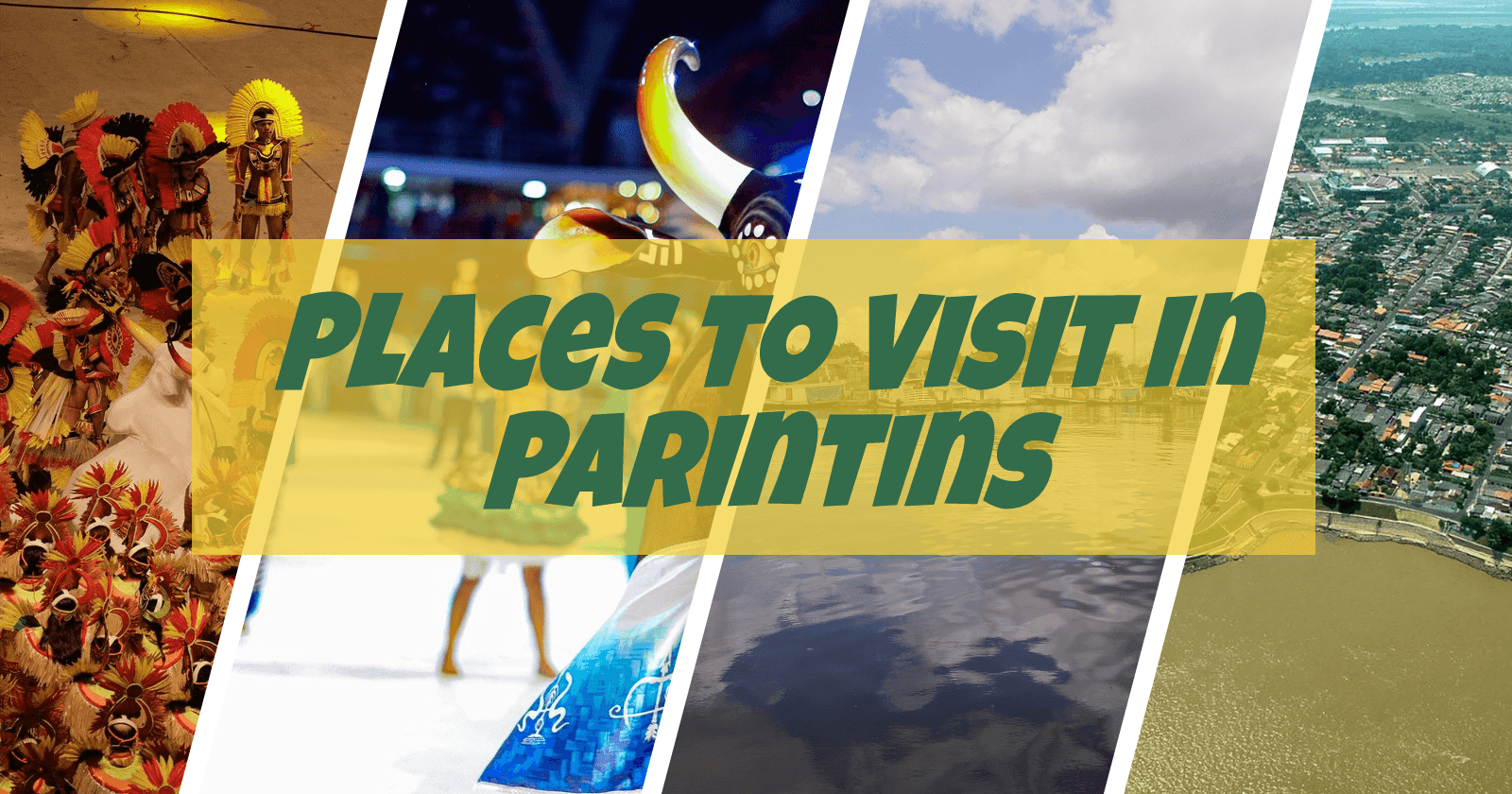
Parintins is best known for the Festival de Parintins, a three-night folklore contest between two rival oxen — Garantido in red and Caprichoso in blue — held every June in a purpose-built arena shaped like an ox head. Beyond the festival, the island offers a 1962 cathedral with a climbable tower, clear-water lakes, seasonal river beaches and the ruins of a 1930s Japanese colony.
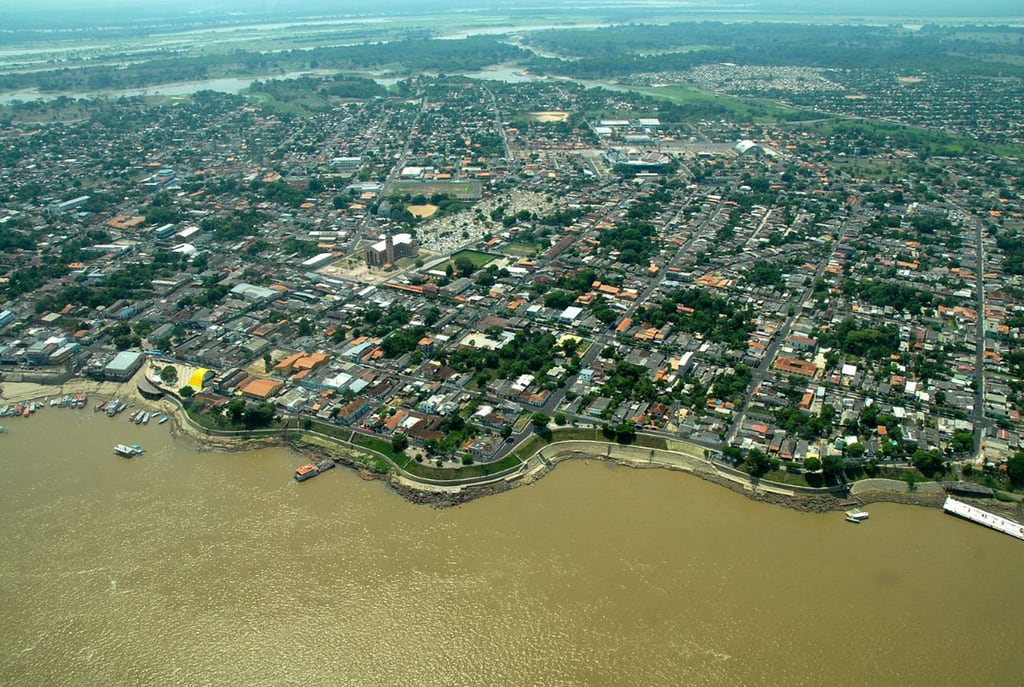
Parintins sits on Tupinambarana island in the Amazon river, about 370 kilometres east of Manaus and a few hours short of the Pará state border. There is no road. You arrive by air or by water, and that single fact shapes everything about visiting — the cost, the timing, and the particular feeling of a city of roughly 96,000 people that for one weekend a year receives about as many visitors again.
Most travellers come for the festival and see nothing else. That is a shame, and it is also a trap: the attractions that depend on low water are largely submerged in June. This guide covers both versions of Parintins, and is honest about which trip you are actually booking.
1. The Festival de Parintins
The festival began in 1965, organised by the Juventude Alegre Católica as a fundraiser for the town’s cathedral. The first edition had no oxen at all — twenty-two quadrilhas and nothing more. Garantido and Caprichoso joined in 1966, and the rivalry has run ever since.
In 2026 the 59th edition ran on 26, 27 and 28 June. The festival is traditionally held on the last weekend of June, though the exact dates are confirmed by the Amazonas state government each year rather than fixed in advance. If you are planning ahead, treat late June as the window and wait for the official announcement before booking anything non-refundable.
Garantido and Caprichoso
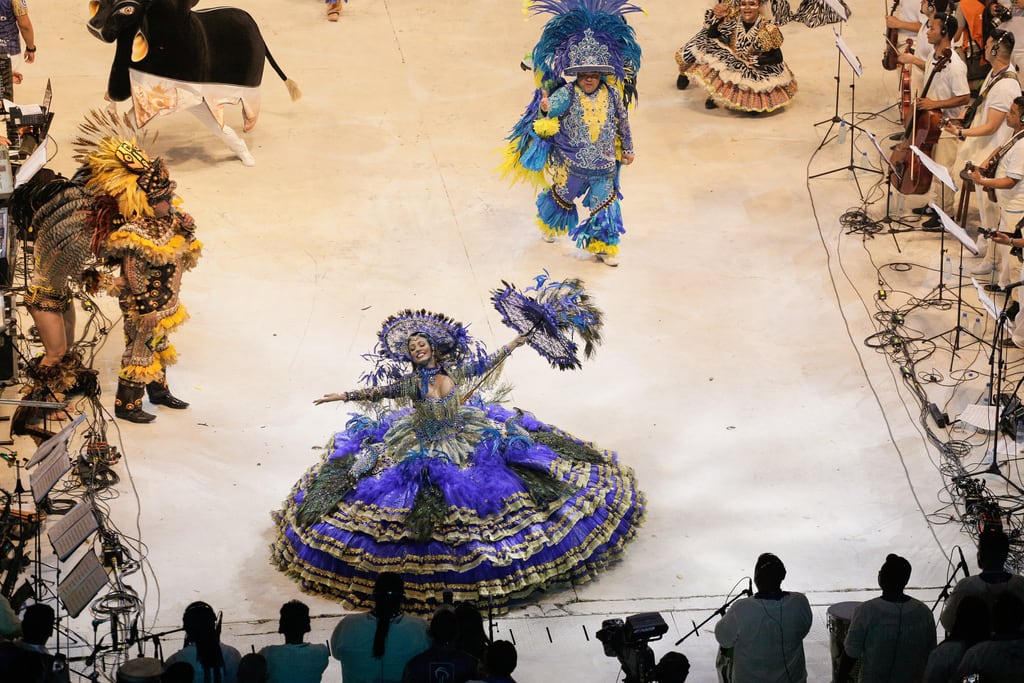
Both oxen trace their founding to 1913. Garantido — red and white, with a red heart on its forehead — is credited to Lindolfo Monteverde, then eighteen, in the Baixa de São José fishing quarter, made from inajá palm husk as a religious promise. Caprichoso — blue and white, with a blue star — was founded that October by the Cid siblings, migrants from Ceará. Local historians are candid that the 1913 dates are traditional rather than documentary; there are no official records from the period.
The rivalry is total and it is civic. People are born into a side. Shops, houses and boats declare an allegiance, and for the length of the festival the town divides cleanly down the middle.

How the contest is judged
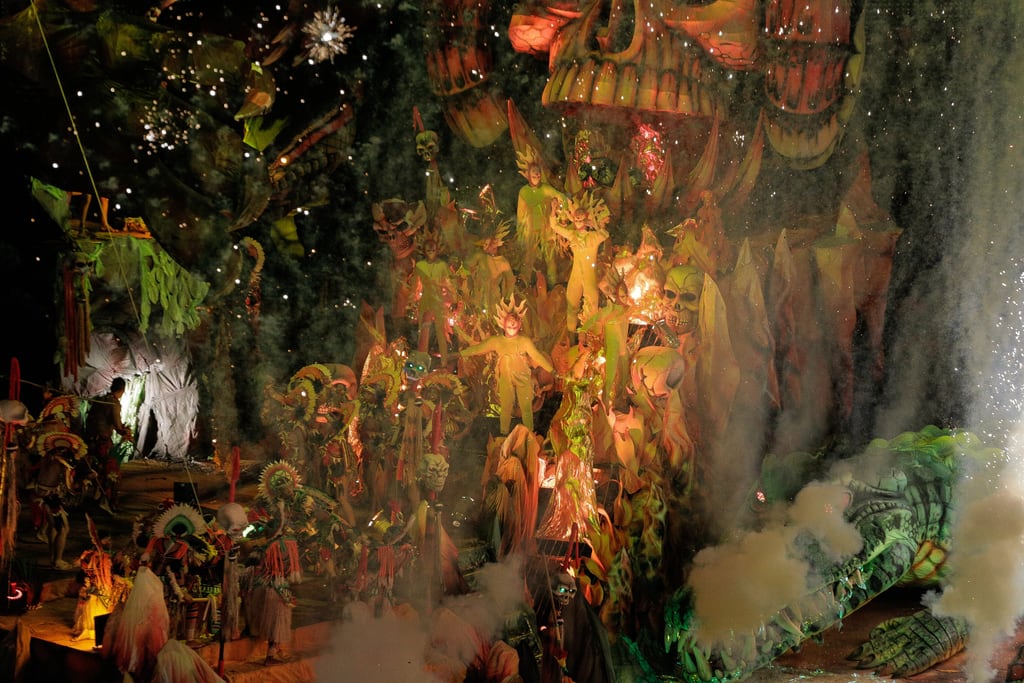
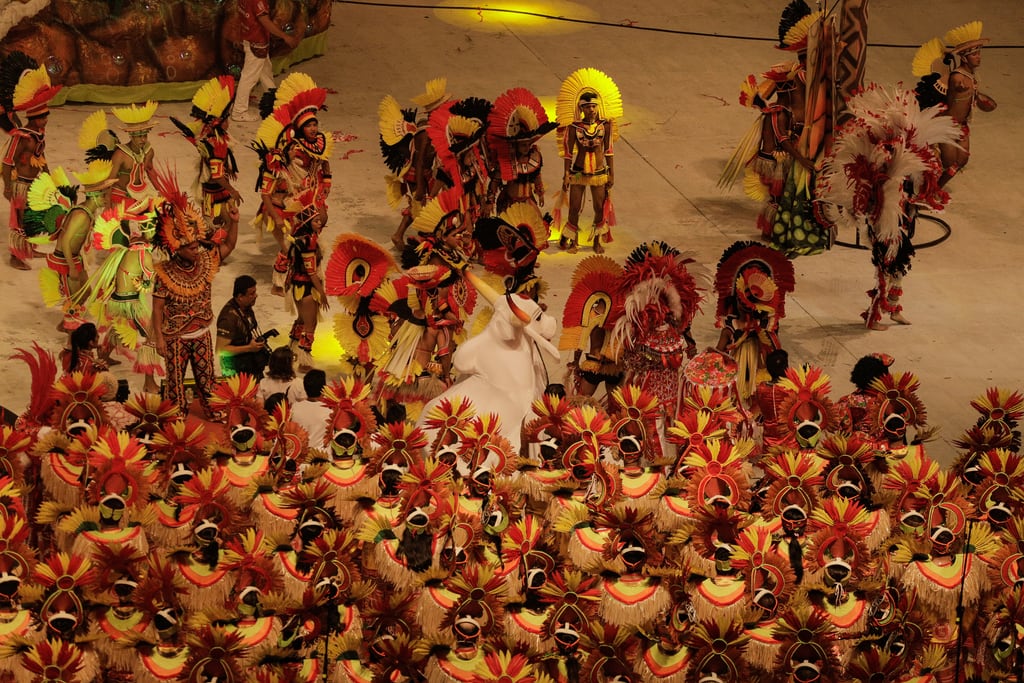
Each ox performs once a night across three nights, alternating. Performances are scored on twenty-one items grouped in three blocks — musical, scenic-choreographic and artistic — covering everything from the levantador de toadas (the lead singer) and the cunhã-poranga to the allegorical floats, the indigenous ritual sequences and the Amazonian legend each company chooses to stage. Judges are drawn from outside Brazil’s North region, and must justify every score in writing against the regulation.

The silence rule
This is the detail that makes Parintins unlike any other festival in Brazil. While one ox performs, the rival half of the arena must stay completely silent — no booing, no applause, no shouting. It is not merely etiquette. “Galera” is judged item number nineteen, scored on animation, synchronisation, participation and creativity, so a badly behaved crowd costs its own side points.
The result is a stadium of tens of thousands that switches between deafening and mute on cue, three times a night. It is worth the trip on its own.
2. The Bumbódromo
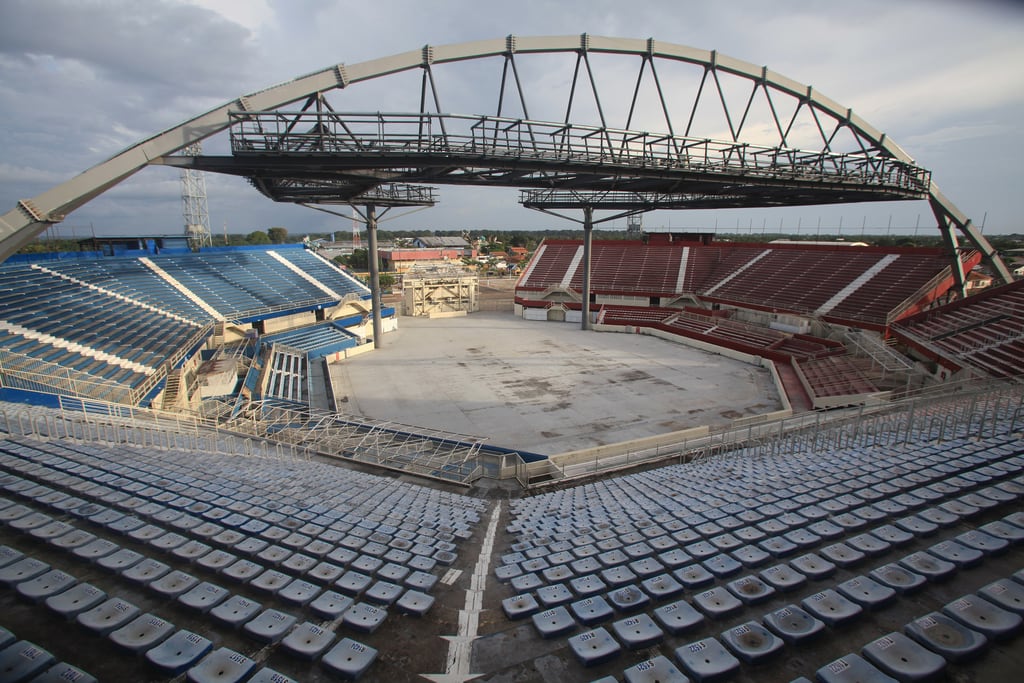
Officially the Centro Cultural e Esportivo Amazonino Mendes, the Bumbódromo was inaugurated on 28 June 1988 and fully restructured in 2013. Seen from above it is shaped like a stylised ox head, horns and ears included, and the seating is divided symmetrically — blue for Caprichoso on one side, red for Garantido on the other.
Capacity is usually quoted at around 25,000; the Amazonas state culture portal gives 25,566, while other sources claim figures as low as 16,500 and as high as 35,000. Treat any single number you see with caution. Seating runs from free lateral bleachers through paid central bleachers and numbered chairs to private camarotes.
Tickets
Tickets are sold exclusively through Bilheteria Digital, with a limit of two per CPF (the Brazilian tax ID). For foreign visitors this is the single biggest practical obstacle, and the reason most international travellers book through an operator rather than direct. Plan this months out, not weeks.
The accessible space
The Amazonas State Secretariat for the Rights of Persons with Disabilities (SEPcD) runs a formal Espaço Acessível inside the arena, and it is better provisioned than most Brazilian events. For 2026 it offered 60 places a night — 30 for people with disabilities, each with the right to one companion — positioned centrally in the Bumbódromo, directly facing the VIP camarotes rather than tucked into a back corner. Provision included access ramps, Libras (Brazilian Sign Language) interpreters on support screens, audio description, hydration points and multi-professional support teams.
Accessibility: Registration is free but online-only, opens roughly two months ahead through sepcd.am.gov.br, and closes quickly — in 2026 the window ran 23–27 April, with results published on 5 May. Fifteen of the thirty places are reserved for Parintins residents. Sixty places a night against an arena of some 25,000 is a very small allocation, and there is no documented walk-up accessible ticketing, so this needs planning from about March. The 2013 renovation also improved general accessibility at the venue.
A cultural centre year-round
Outside festival week the building is the city’s main cultural venue. It houses the Liceu de Artes e Ofícios Claudio Santoro, which runs workshops in theatre, dance, visual arts, audiovisual and music, alongside galleries, a film club and a library.
3. The Cathedral and the Historic Centre
The Catedral de Nossa Senhora do Carmo was designed in Italy, built in exposed brick and inaugurated in 1962 — and it is the reason the festival exists, since the first edition was staged to raise money for it. Its tower stands 40 metres and can be climbed for the best view over the city and the river. Sources disagree on the number of steps, but it is well over 150 and there is no lift.
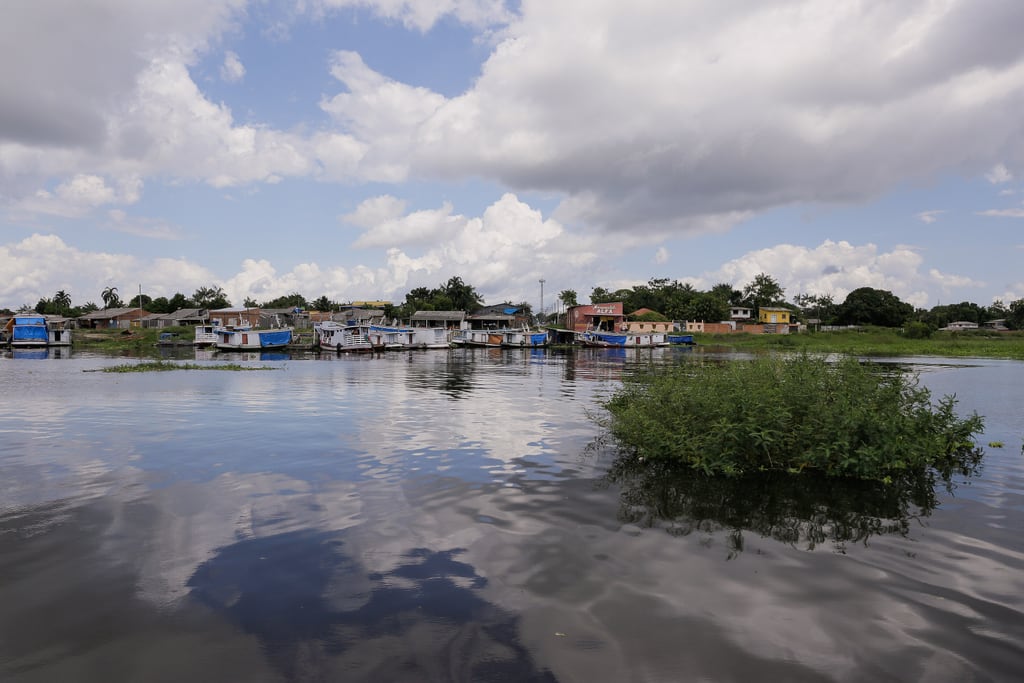
The old town rewards an unhurried hour. The Igreja do Sagrado Coração de Jesus overlooks the Amazon and is a local favourite for sunset. The Igreja de São Benedito dates originally from 1795 and was rebuilt in 1945. Rua Coronel José Augusto is a corridor of brightly painted early-twentieth-century houses, and there are sobrados along the waterfront going back to 1883. A handicraft market near the cathedral gathers dozens of artisans.
Accessibility: The historic centre is flat, which helps, but pavements are uneven and frequently interrupted by driveways and street trading. The cathedral tower is stairs-only. If you use a wheelchair, the waterfront promenade and the Praça do Comunas are the most comfortable places to spend time.
4. Lakes, River Beaches and the Water Calendar
This is the Parintins most festival visitors never see, because in June it is under water. The Amazon here runs on a flood cycle: high water from roughly December to May, falling from June, with the rivers at their lowest in October and November. Sand beaches emerge as the water drops.
Lago do Macurany
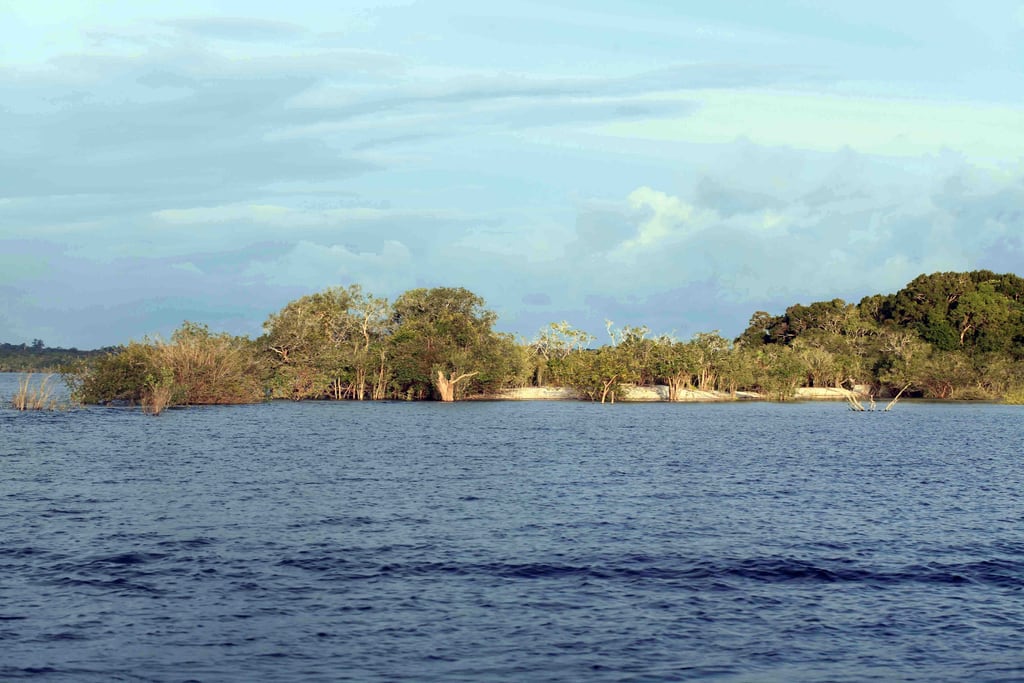
Ten kilometres long and immediately behind the city, Macurany is the easiest water trip to arrange — boat outings, sport fishing, and a nursery for rare bird species. The Flutuante da Soraya, a floating platform on the lake, is free to enter.
River beaches
Praia de Taracuera, on the clear-water Uaicurapá, offers over a kilometre of sand and good birdlife. Praia do Varre Vento sits between the Mamuru and Uaicurapá rivers. Balneário Cantagalo, seven kilometres out at the Aningá community, is the most developed: pier, football and volleyball courts, a show stage, restaurant, bar and camping.
Viewpoints
The Serra de Parintins rises to 154 metres and, with the Morro de Santa Rita, is reached by boat rides of around forty minutes. The Serra da Valéria, near the Amazon proper, is known for mist-shrouded views.
| Season | Months | River level | Best for |
| Cheia (flood) | December – May | High, rising | Forest canoe trips, flooded-forest wildlife |
| Festival | Late June | High but falling | The festival itself; beaches still submerged |
| Vazante (falling) | July – September | Dropping fast | Sandbanks starting to appear, fewer visitors |
| Seca (dry) | October – November | Lowest | River beaches, swimming, sport fishing |
5. Vila Amazônia and the Japanese Colony
About twenty minutes downriver, washed by the Amazon and the Paraná do Ramos, Vila Amazônia marks the arrival of Japanese settlers in the Amazon. The settlement covered 78,270 hectares, and ruins dating from around 1930 still stand east of the city. It is an unexpected and quietly moving corner of the region’s history — one that almost no festival visitor makes time for.
6. Getting to Parintins
There is no road connection. Every arrival is by air or water, and in festival week both are heavily oversubscribed.
| Route | Journey time | Notes |
| Flight from Manaus (MAO → PIN) | About 1 hour | Azul is the only scheduled airline and Manaus the only scheduled destination; extra flights are added for the festival |
| Riverboat from Manaus | 14–18 hours downstream | Return upstream takes 24–30 hours; hammock or cabin class; meals served on board |
| Speedboat (lancha) from Manaus | 6–8 hours downstream | 8–10 hours on the return; departs the Port of Manaus |
| From Santarém (Pará) | 11.5+ hours by boat | No direct flight — air routings connect via Manaus or Belém |
Where to stay during the festival
Hotels and pousadas sell out completely, and the private rental market becomes extraordinary — whole houses have been advertised at tens of thousands of reais for a five-night stay, with furnished rooms a fraction of that. The characteristic Parintins solution is to sleep on the boat you arrived on: ferry tickets from Manaus normally include the right to stay aboard for the festival, slinging a hammock in the common areas, with private cabins sold on top. Collective hammock halls, redários, are the budget fallback.
Accessibility: This is where honesty matters. We found no documentation at all on wheelchair access aboard the Manaus–Parintins ferries or speedboats, and none on accessible accommodation or transport within the city. Given hammock-deck layouts and gangplank boarding at river ports, assume the water routes are difficult and speak to operators directly. Flying into PIN and arranging ground transport in advance is the more realistic route, and it is what we would plan for our own travellers.
7. Things Worth Knowing Before You Go
- Coca-Cola turns blue here, and only here. Once a year the brand swaps its red livery for Caprichoso blue — reportedly the only place in the world it officially changes colour. It has sponsored the festival since 1995, and in 2011 sold half-red, half-blue cans across Amazonas. Blue-branded companies do the reverse for Garantido.
- It is Brazilian national heritage, not UNESCO. The Complexo Cultural do Boi-Bumbá do Médio Amazonas e Parintins was registered by IPHAN in the Livro das Celebrações in November 2018. You will see “UNESCO” claimed all over the internet; it is wrong.
- The climate is hot and humid year-round, averaging around 26–27°C with highs in the mid-thirties, and roughly 2,475 mm of rain a year concentrated between January and May.
- The festival is a security operation. In 2026 it involved more than 1,200 personnel across some 60 agencies, with R$10 million in state funding.
Frequently Asked Questions About Parintins Brazil
When is the Festival de Parintins held?
On the last weekend of June, across three nights. The 59th edition ran on 26–28 June 2026. Exact dates are confirmed annually by the Amazonas state government, so check before booking.
How do you get to Parintins?
By air or river only — there is no road. Azul flies from Manaus to Parintins (PIN) in about an hour. Riverboats take 14–18 hours downstream from Manaus and 24–30 hours coming back; speedboats take 6–8 hours down.
Is Parintins worth visiting outside the festival?
Yes, but it is a different trip. From October to November the rivers are at their lowest and sand beaches appear along the Uaicurapá; the lakes, the cathedral, Vila Amazônia and the viewpoints are all there year-round, without the crowds or the prices.
Is the Festival de Parintins accessible for wheelchair users?
Partly. The Bumbódromo has a formal accessible space with ramps, Libras interpreters and audio description, centrally positioned — but only about 60 places a night, allocated by free online registration that closes months ahead. Access elsewhere in the city, and on the riverboats, is not documented and should be assumed difficult.
What is the difference between Garantido and Caprichoso?
They are the two competing oxen. Garantido is red and white with a heart emblem; Caprichoso is blue and white with a star. Both date their founding to 1913 and have competed against each other since 1966.
Conclusion
Parintins is not a convenient destination, and that is the point. An island with no roads, an arena shaped like an ox head, and a rivalry old enough that the town organises itself around it — none of that survives casual tourism, which is precisely why it is still worth the journey.
Decide first which Parintins you want. Late June gives you the festival and very little else, at maximum cost and maximum crowding. October and November give you the river at its lowest, beaches along the Uaicurapá, and a quiet town that is a pleasure to walk. Both are good trips. They are not the same trip.
If you would like help arranging either — including the ticketing, which is genuinely difficult from abroad — see our Parintins trips, browse all our tours, or get in touch and tell us what you need. If you are combining Parintins with the wider region, our guides to Amazonas and the Pantanal are a useful next read.
Image credits: Ministério da Cultura (CC BY 2.0); Wilson Dantas de Brito Neto (CC BY-SA 4.0); MTur Destinos and Mário Oliveira / MTur (public domain), via Wikimedia Commons.
 English
 Portuguese
  Español
  Français
  Deutsch
  Italiano