

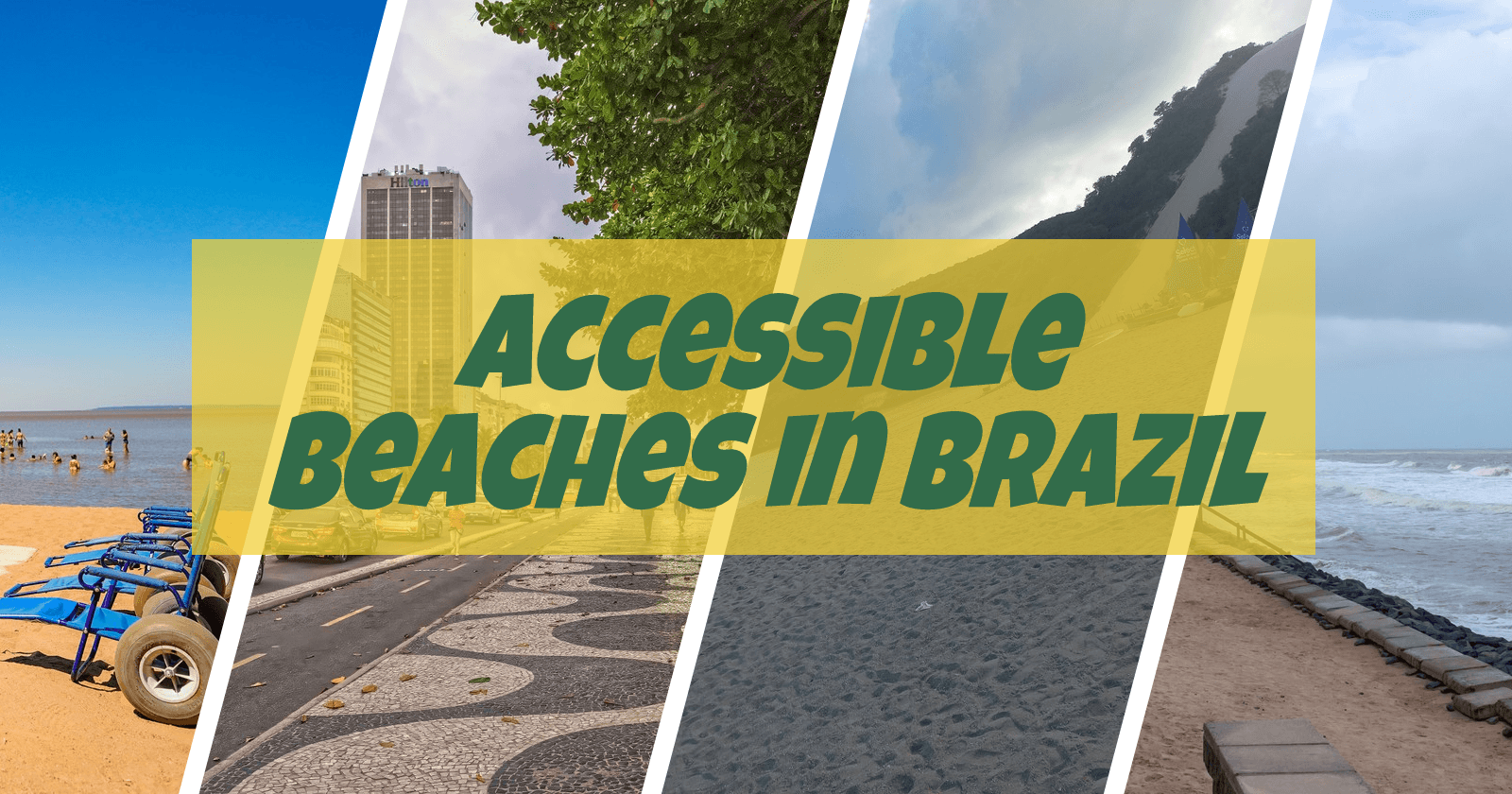
Brazil’s most reliable accessible beaches are in the Northeast, where adapted bathing programmes run year-round: Boa Viagem in Recife, Praia de Iracema in Fortaleza, Ponta Negra in Natal and Pajuçara in Maceió. Rio de Janeiro and the São Paulo coast operate summer seasons only, so a trip planned for the Brazilian winter needs to be pointed north.
This is the single most useful thing to understand, and almost no guide says it. Brazilian adapted beach programmes are not permanent installations you can turn up to whenever you like. They are staffed services with seasons, opening days, operating hours and, in several cities, compulsory advance booking. Get the season wrong and you arrive at an ordinary beach.
As this is published, in August, Rio’s programme has been closed for a month, Santos' own service page says the service is suspended, and São Sebastião is formally shut until October. Recife, Fortaleza and Natal are open, as they are every month of the year.
1. What an Adapted Beach Actually Means
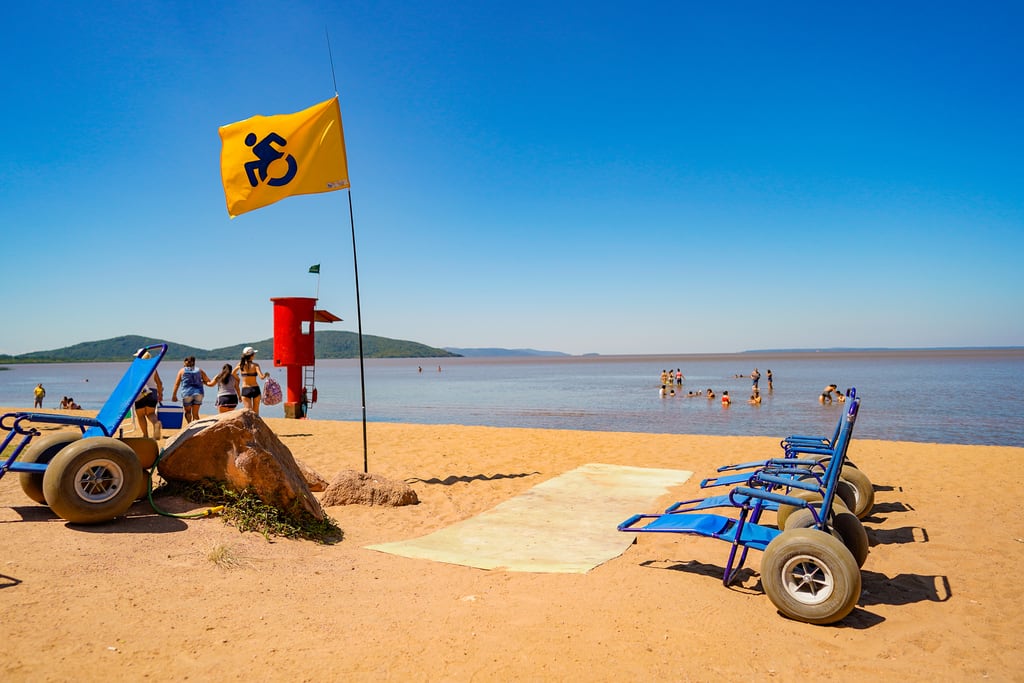
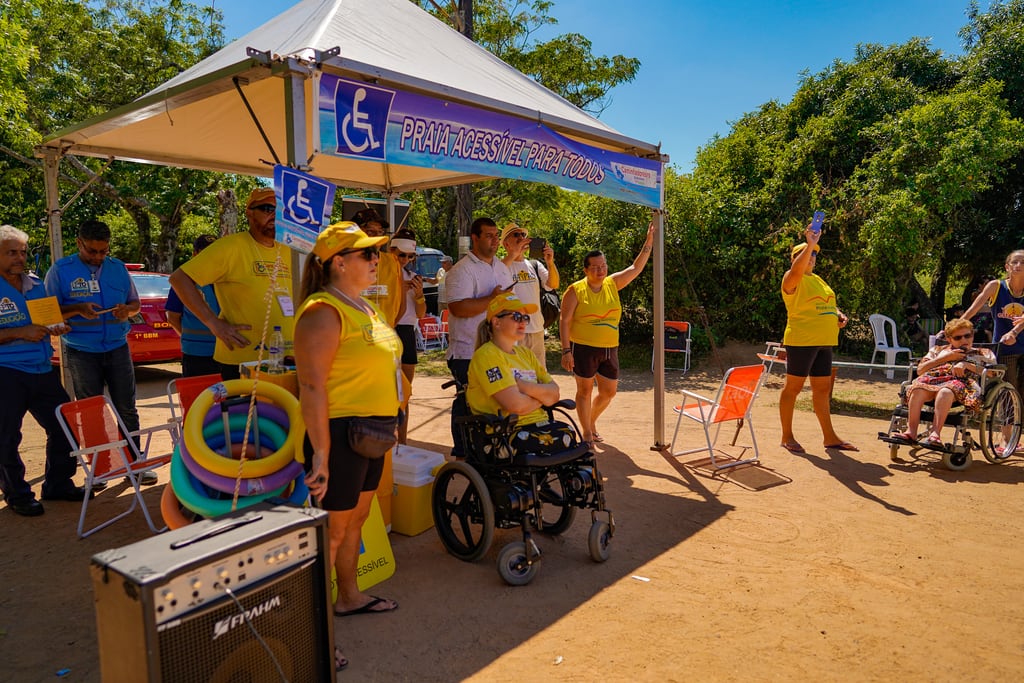
The Brazilian term to know is banho de mar assistido — assisted sea bathing. That is the service; the programme names vary by city, which is why searching is confusing. You will encounter Praia Acessível, Praia Para Todos, Praia sem Barreiras, Verão Acessível and ParaPraia, all doing broadly the same thing under different management.
| Equipment | What it is |
| Cadeira anfíbia | An amphibious beach wheelchair: wide rubber tyres that do not sink into sand, a reclining backrest, and floats — typically two lateral floats doubling as armrests, one at the front as a footrest and wave-breaker, one at the rear. Santos' chairs support up to 150 kg. |
| Esteira / mobi-mat | Rollable matting laid across the sand, porous underneath for grip and smooth on top so wheels glide. Santos' is 1.40 m wide and 150 m long, laid in 10-metre sections. |
| Trained staff | Physiotherapists, PE teachers, occupational therapists, nurses and lifeguards. They take you into the water, not just to the water’s edge. |
| Support structure | Tents for shade, chairs, adapted changing rooms, showers and accessible toilets at the better-equipped points. |
Several programmes go further than bathing, offering adapted surf, seated volleyball, adapted stand-up paddle, handbikes and adapted frescobol — the bat-and-ball game, played with the ball tethered to a line so it returns.
2. The Northeast: The Region That Works Year-Round
If accessible beach time is the point of your trip, go north. Every programme below is morning-only — none runs past 13:00 — which suits the climate anyway.
| City | Programme | When | Booking |
| Recife | Praia sem Barreiras | Year-round, 08:00–13:00 | No — walk up |
| Fortaleza | Praia Acessível | Year-round, Mon–Fri 08:00–12:30 | Required, by WhatsApp |
| Natal | Natal Praia Inclusiva | Year-round, Sat & Sun 08:00–12:00 | No |
| Maceió | Praia Acessível | Weekdays 08:00–12:00 | Weekends need 48h notice |
| João Pessoa | Acesso Cidadão | Saturdays 08:00–12:00 | Confirm locally |
| Salvador | ParaPraia | A two-week window only | Confirm locally |
Recife — Praia sem Barreiras
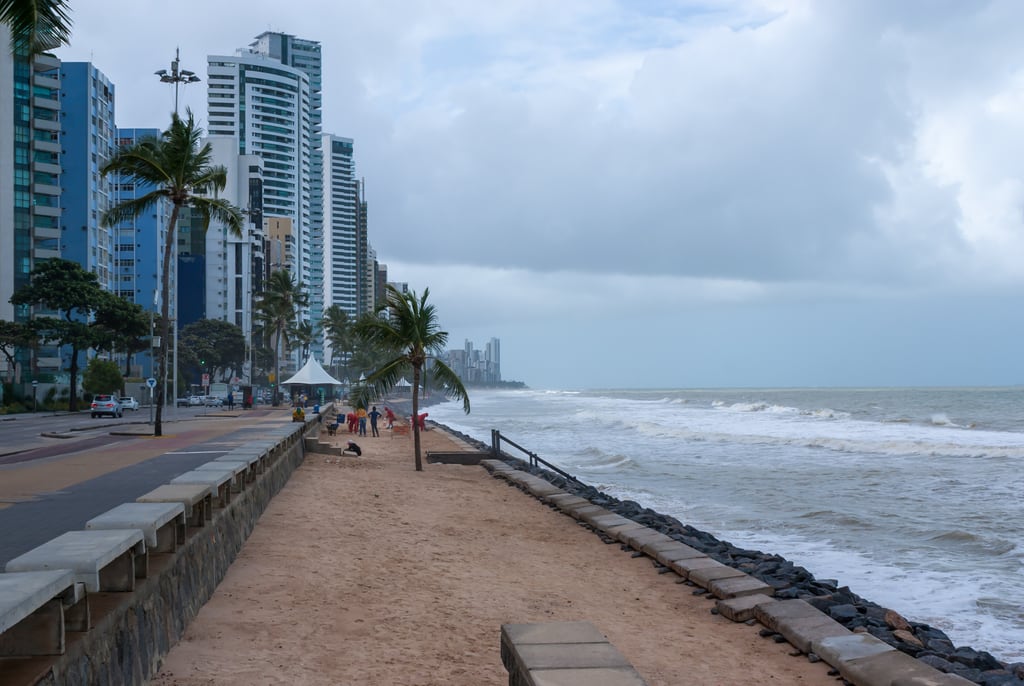
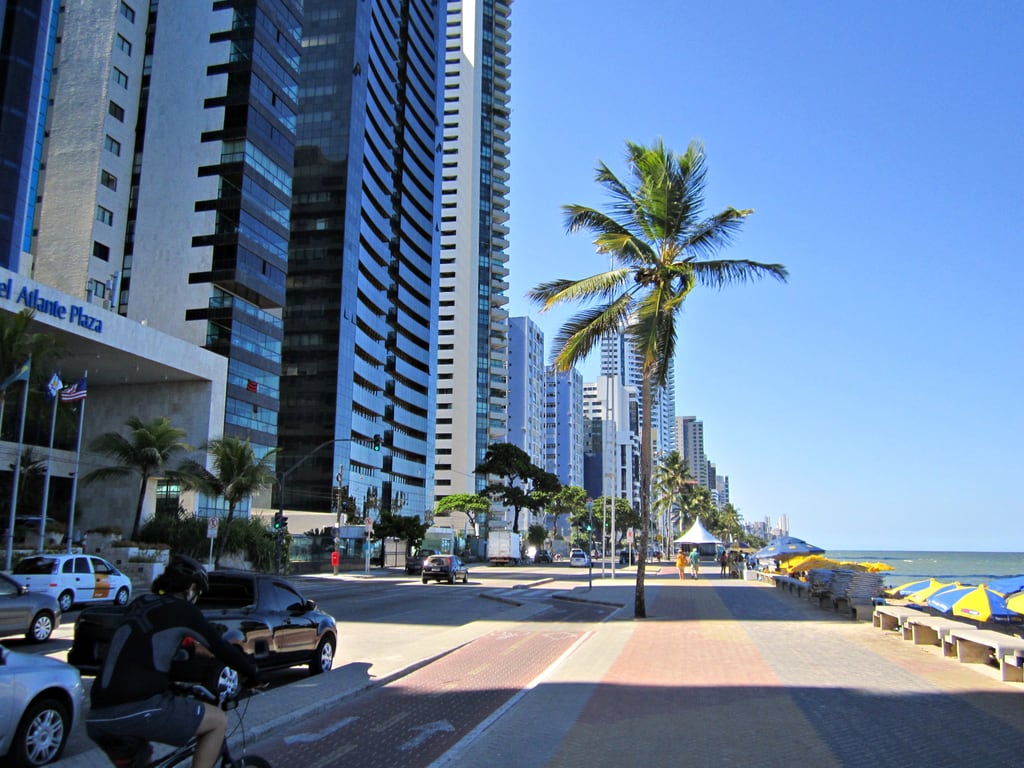
The one we would send someone to first. It operates on Boa Viagem near Posto 7, at Rua Bruno Veloso, and has run since 12 March 2013 — around 7,000 people served. Amphibious chairs plus removable stretchers, free, no booking, run by the city’s human rights secretariat. In March 2026 it was renamed in memory of Mosana Cavalcanti, the woman who started it, who died in 2025.
Accessibility: It suspends in heavy rain or high tide, so swell matters as much as sunshine. Sources disagree on whether it runs Friday to Sunday or only Friday, Sunday and holidays — worth a message before you go.
Fortaleza, Natal and Maceió
Fortaleza runs at the Aterrinho da Praia de Iracema on Avenida Beira-Mar, weekdays only, and is the one Northeast programme that requires advance booking — by WhatsApp. It has amphibious chairs, matting, flotation aids, and lifeguard and fire-brigade support. It was confirmed operating in July 2026, the freshest confirmation of any programme in this guide.
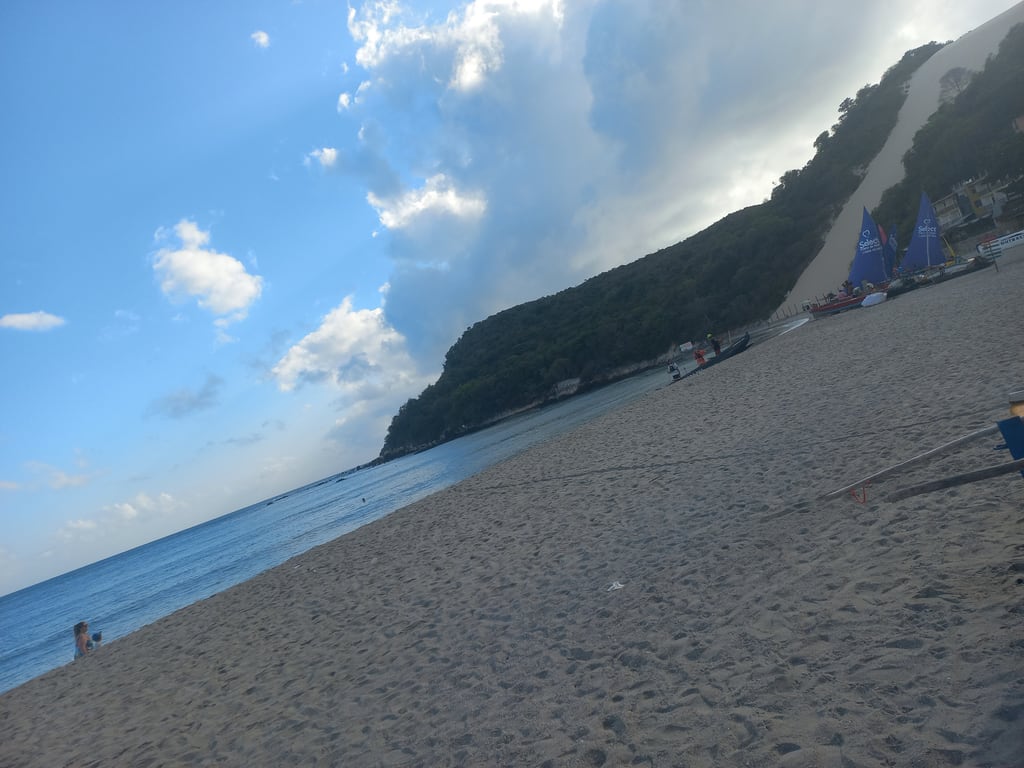
Natal's project has run at Ponta Negra since 2017, serving 200-plus people a month, with sitting volleyball, stand-up paddle, kayaking and adapted football alongside the bathing. It also travels: itinerant editions run at Redinha and Pirangi.
Maceió operates from the Praça Gerônimo Siqueira at the start of the Pajuçara seafront — Pajuçara only, not Ponta Verde. Weekdays are walk-up; weekends need a form submitted 48 hours ahead.
3. Rio de Janeiro: Excellent, and Seasonal
Rio’s Praia Para Todos is the best-known adapted beach project in Brazil and it is worth clearing up who runs it: not the city. It was created by the NGO Instituto Novo Ser in 2008, piloted at Leblon in 2009, and is supported by Orla Rio, the beachfront kiosk concessionaire. The city’s tourism department backed the pilot; it does not run the programme.
It is free, serves roughly fifty people a day per beach, delivered over 4,730 free services in 2025, and won a major Rio public-service prize in May 2026. It operates Saturdays and Sundays during a summer season — the 2025/26 season opened on 13 December 2025 and closed on 5 July 2026.
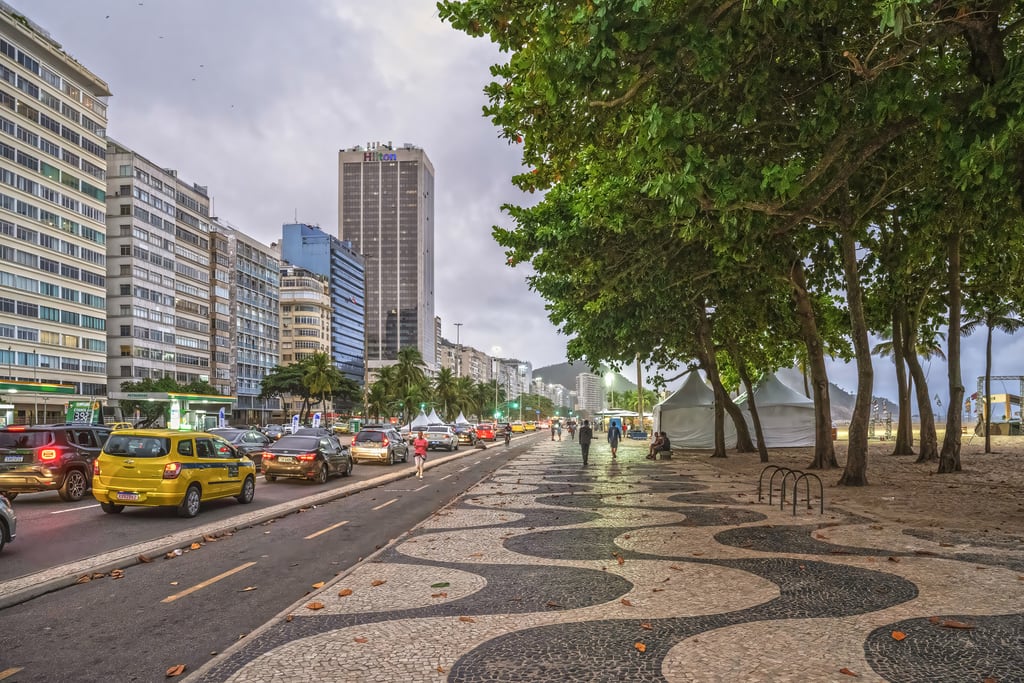
The beach roster moves, and this is the thing to plan around. Five points were announced for 2025/26 — Flamengo, Copacabana, Ipanema, Barra da Tijuca and Recreio — but by May 2026 the programme was reporting three. Copacabana between Postos 5 and 6, and Barra da Tijuca at Posto 3, appear in every source; Recreio in most. Ipanema and Flamengo dropped off mid-season.
Accessibility: If you are travelling to Rio between roughly December and April, this is a genuinely good service and no booking is needed. Between June and November, plan on the beach being an ordinary beach — and consider whether the Northeast suits your dates better.
4. The São Paulo Coast
The São Paulo state programme dates from 2010, with the state supplying the amphibious chairs and municipalities supplying the staff. Delivery today is effectively municipal, and quality varies enormously between neighbouring towns.
| City | Status as of August 2026 | Detail |
| Caraguatatuba | Running, year-round | Praia do Centro beside the Praça da Cultura. The best-documented programme on the coast, running since 2012, with adapted surf, seated volleyball and handbikes as well as bathing. |
| Praia Grande | Running | Praia da Guilhermina beside kiosk 22, weekends and holidays. In January it expands to four points along Avenida Presidente Castelo Branco, daily. |
| Ilhabela | Running | “Verão Acessível” — six beaches plus a waterfall, on a partner-point model: you collect the chair from a named local business rather than a staffed post. |
| Guarujá | Seasonal | Praia de Pitangueiras, Thursday to Sunday, 09:00–13:00 — but suspended over winter. |
| São Sebastião | Suspended | Two poles, four chairs. Formally shut for winter from 20 June, returning 1 October 2026. |
| Santos | Suspended | Its own service page said “suspenso para reedição” on 20 July 2026 — despite a March 2026 law making beach accessibility permanent. |
The Santos situation deserves a note, because it captures the whole problem. In March 2026 the city passed Lei nº 4.729 instituting permanent, year-round beach accessibility, with mandated ramps, amphibious chairs, matting, accessible signage, adapted toilets and support staff. Four months later its own service page carried a suspension notice. Both things are true at once, and only a phone call resolves it.
5. The Honest Limits
Everything above is real and much of it is very good. But an accessible-travel guide that only lists the good news is not much use, so:
- It is one stretch of one beach, never a whole beach. Recife is a single point near Posto 7 on a beach several kilometres long. Salvador is one cove in Ondina. Maceió is one square in Pajuçara.
- Rosters shrink mid-season. Rio announced five beaches in December 2025 and was down to three by May 2026 — same season, same operator.
- Equipment goes out of service. Fernando de Noronha’s amphibious chair service at Praia do Sueste is flagged as suspended on the park’s own site, with no restart date.
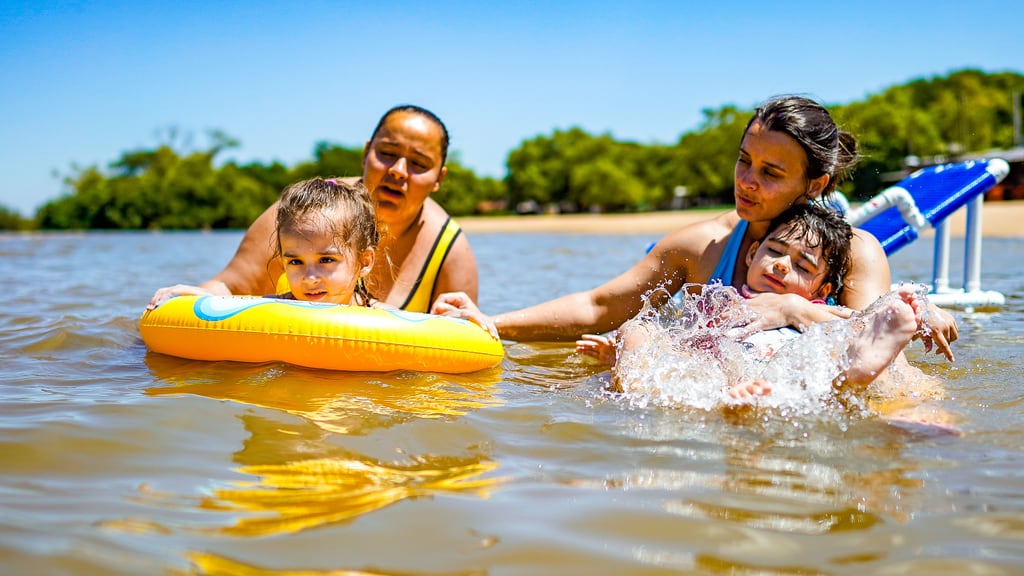
- Capacity is small. Around fifty people a day per beach in Rio; about ninety a day in Salvador; twenty-minute bathing sessions in Santos. These are not drop-in-anytime facilities.
- NGO-run projects are fragile. Adaptsurf, Rio’s pioneering adapted surf organisation founded in 2007, delivered thousands of free lessons over seventeen years — and both of its web domains now fail to resolve, with no activity traceable since 2023. That is what programme decay looks like from the outside.
- Everything is a morning. Northeast programmes run roughly 08:00 to 12:00 or 13:00; Rio and Santos 09:00 to 14:00 or 15:00. There is no such thing as an adapted-beach afternoon in Brazil.
6. National Parks and Islands
Beach programmes are municipal, but two of Brazil’s most sought-after coastal destinations sit inside federal protected areas, where the provision works differently — and, in one case, considerably better.
Fernando de Noronha publishes more concrete accessibility detail than most Brazilian parks. Praia do Sueste has a fully accessible deck and a beach access ramp; there are over 1,500 metres of raised walkways and accessible decks across the park; accessible toilets at PIC Sancho, PIC Sueste, PIC Leão and the Visitor Centre; and the Trilha do Golfinho is built to Brazil’s ABNT accessibility standard. All-terrain trail wheelchairs are available with seven days' notice, and the walkway to the Baía do Sancho clifftop viewpoints is wheelchair accessible even though the beach below it is not.
Accessibility: The one thing to check: Noronha’s amphibious chair service at Sueste is currently flagged as temporarily suspended on the park’s own site, with no restart date, and snorkelling at Sueste is separately suspended. Both notices are undated. Email the park before you build a trip around either.
Outside the coast, the clearest worked example is Cachoeira Camapuã in Itatiaia National Park, Rio de Janeiro state, which has an adapted trail with handrails, a ramp into the water and an amphibious chair by advance reservation. It is a useful proof that the model transfers inland to rivers and waterfalls, not just sea beaches.
7. How to Check Before You Travel
Official web pages are frequently stale — Santos', Maceió's and Fernando de Noronha’s all carry undated or contradictory information. In order of reliability:
- WhatsApp the operator. Brazilian municipal services answer WhatsApp far more reliably than email.
- Check the programme’s Instagram. That is where cancellations and season dates actually get posted.
- Then the official page, which is often months behind.
Ask three specific questions: is it running this month, which days, and is the equipment currently in service. That last one matters — a programme can be nominally active with its chair out for repair.
What to plan for on the day
- Arrive at opening. With around fifty places a day and morning-only hours, late arrivals get turned away at the busier points.
- Expect very little shade beyond the project tent. These are equatorial or near-equatorial beaches and the programmes run in full sun; bring cover, water and high-factor sunscreen.
- Sessions are timed. Santos caps bathing at twenty minutes so the chair circulates. Plan the beach around the session, not the session around the beach.
- Getting to the point matters as much as the point itself. The adapted stretch may be step-free while the two hundred metres of pavement leading to it are not. Northeastern seafront promenades — Boa Viagem’s calçadão, Ponta Negra’s, Pajuçara’s — are generally the most reliably level surfaces in their cities, which is one more argument for the Northeast.
- Bring a companion if you can. Most programmes provide assistance into the water, but almost none provide personal care, and several sites elsewhere in Brazil require a companion outright.
Frequently Asked Questions About Accessible Beaches in Brazil
Which is the most accessible beach in Brazil?
For reliability, Boa Viagem in Recife: the Praia sem Barreiras project has run there since 2013, year-round, free and without booking. For range of activities, Ponta Negra in Natal and Praia do Centro in Caraguatatuba both offer adapted sport as well as bathing.
Do I need to book an adapted beach in Brazil?
It depends on the city. Recife, Natal, Rio and Santos are walk-up. Fortaleza requires booking by WhatsApp, Maceió requires 48 hours' notice at weekends, and Fernando de Noronha’s trail wheelchairs need seven days.
Are Brazil’s accessible beaches free?
Yes. Every programme covered here is free to use, including the chairs and the assistance.
What is a cadeira anfíbia?
An amphibious beach wheelchair. Wide rubber tyres let it cross sand without sinking, and built-in floats let it go into the sea with you — usually two lateral floats that also work as armrests, plus front and rear floats.
When is the best time of year for accessible beaches in Brazil?
December to March if you are going to Rio or the São Paulo coast, because those programmes run a summer season and shut for the winter. Any month at all in the Northeast — Recife, Fortaleza, Natal and Maceió operate year-round.
Conclusion
Brazil has built more genuine beach accessibility than its reputation suggests: amphibious chairs, trained staff who take you into the water, matting across the sand, and in several cities adapted sport alongside it. Much of it is free, and some of it has been running for over a decade.
What it has not built is consistency. The same country that passed a law guaranteeing permanent beach accessibility in Santos had that city’s programme suspended four months later. So plan around dates and confirm before you fly — and if your dates fall in the Brazilian winter, point the trip at the Northeast, where the programmes never close.
Planning a beach trip around access needs is exactly what we do. Tell us your dates and what you need and we will build the itinerary around what is genuinely running — see our tours or get in touch. You may also want our guides to Salvador, Rio de Janeiro and Florianópolis.
Image credits: Cesar Lopes / PMPA (attribution licence); Matti Blume (CC BY-SA 4.0); Ppulbatu (CC BY 4.0); A. Júnior (CC BY 2.0); Wilfredor (CC0), via Wikimedia Commons.
 English
 Portuguese
  Español
  Français
  Deutsch
  Italiano