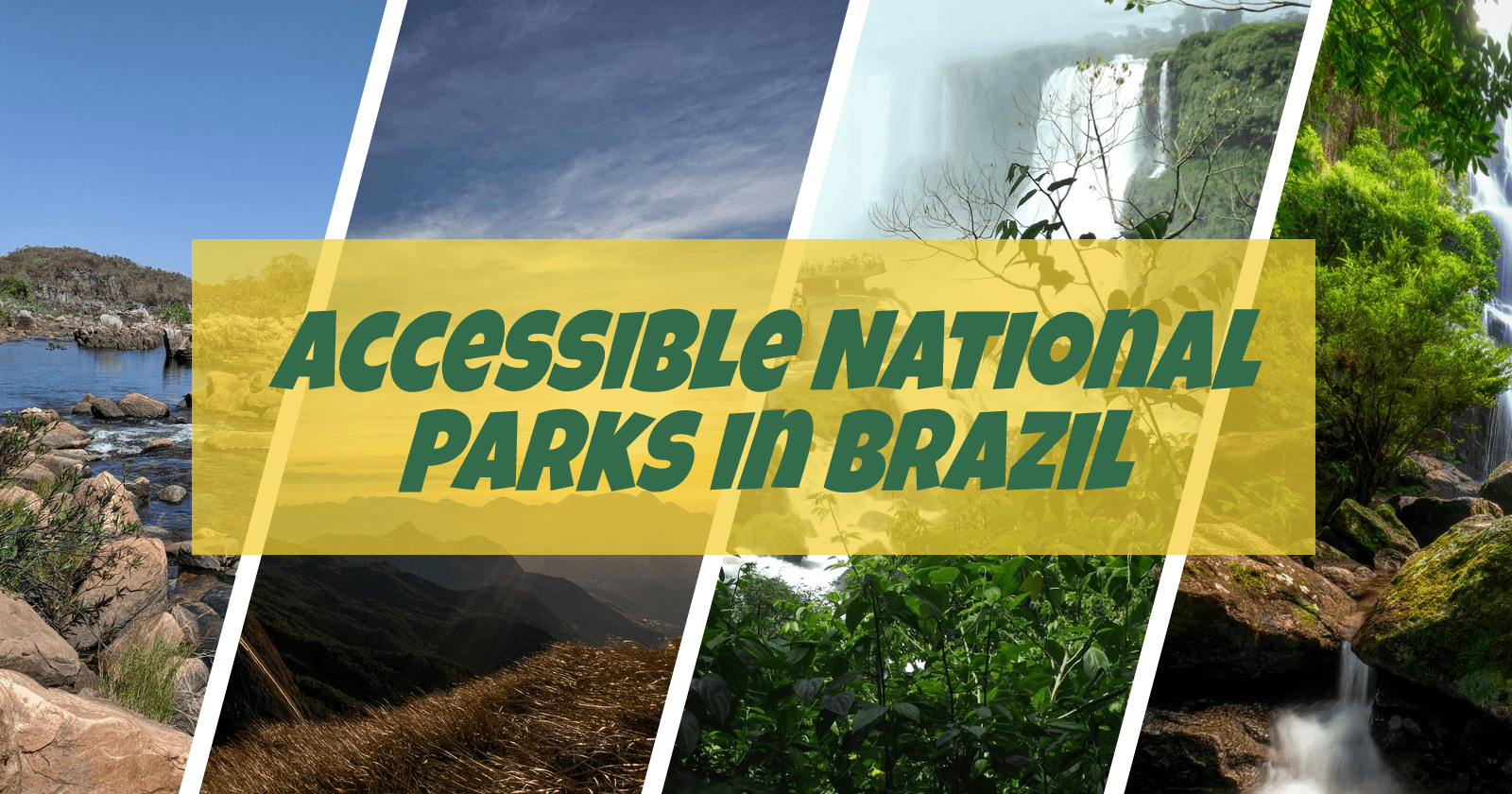
Brazil’s federal park authority, ICMBio, showcases eight conservation units with accessible infrastructure: Itatiaia, Tijuca, Serra dos Órgãos, Viruá, Chapada dos Veadeiros, Iguaçu, Fernando de Noronha and the Araripe-Apodi national forest. It manages 344 units in total. Iguaçu is the most complete of the eight; Tijuca currently advises wheelchair users not to use the trail it is listed for.
That ratio is the honest starting point, and so is a second one: across the whole federal system, exactly two units offer anything at all for deaf visitors — Itatiaia and Iguaçu, and in both cases it is videos with sign-language interpretation.
This guide is what ICMBio and each park’s operator actually publish, checked in August 2026. Where they contradict each other — and they do — we say so, because a wrong answer here strands someone at a trailhead in a national park.
1. Eight Showcased, Not Eight Counted
The list is real and worth using, but it is not a register. ICMBio calls it a list of options, published on a hub built to help visitors find inclusive experiences and describing them as examples that inspire accessible actions. It is a showcase.
The page proves its own incompleteness rather neatly: it carries a photograph captioned Serra da Canastra — a ninth park, illustrated but never listed. ICMBio’s companion page for visually impaired visitors names two more units that the mobility list omits entirely, the Ipanema and Carajás national forests. So the right phrasing is eight showcased, never the only eight.
One more piece of shape before the parks themselves. Six of the eight are national parks; there are 77 national parks among the 344 federal units. And the eighth entry is not a park at all but a national forest, Araripe-Apodi. The page was last updated in July 2025 and has not been touched since.
2. Iguaçu: The One That Works
If you want a Brazilian national park that a wheelchair user can genuinely spend a good day in, this is it, and nothing else on the list is close.
- Free conventional wheelchair loan, on request at the Visitor Centre — and again at Porto Canoas.
- Adapted internal buses with a boarding platform operated by trained staff.
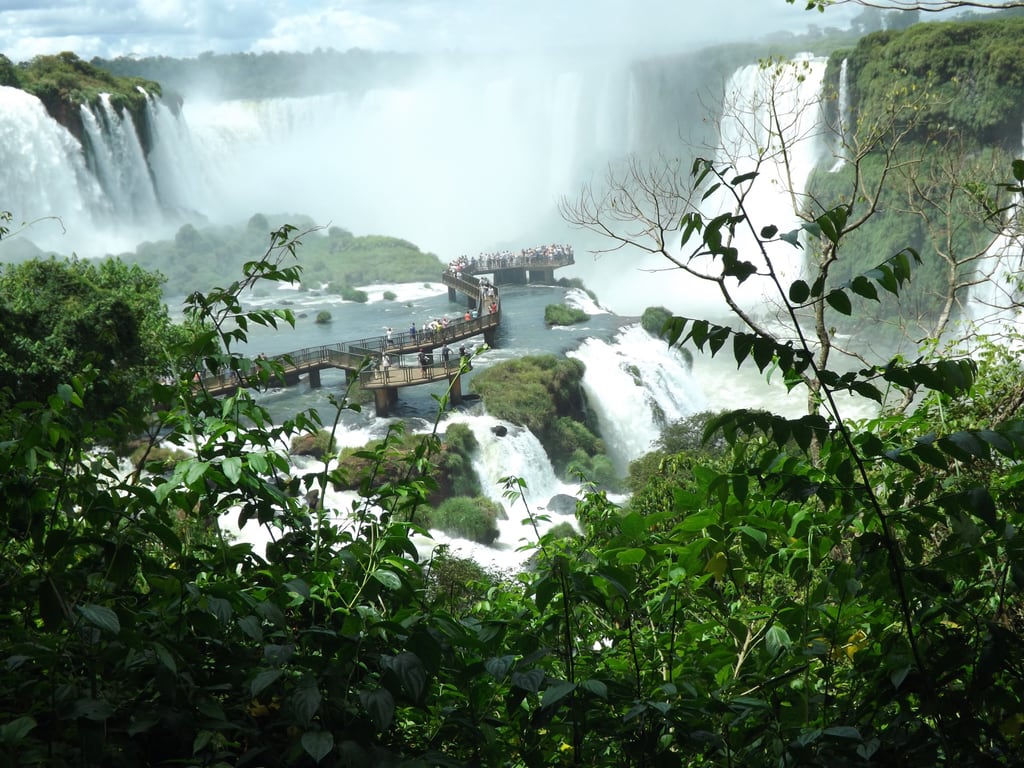
- Ramps and lifts at the main viewpoints — Mirante do Heliponto, Mirante do Hotel das Cataratas, and the upper and lower Espaço Naipi — giving access to the Cataratas walkway and the Garganta do Diabo.
- Accessible toilets at every visitor support structure, fitted with grab bars.
- Hand-bike hire on the Ciclovia das Cataratas, and ramps at the Poço Preto and Bananeiras reception points.
- Braille menus at the kiosks, and ear defenders for autistic visitors who find the noise of the falls overwhelming.
Accessibility: The park is also honest about its own limits, which is rarer than it should be: it states plainly that doing the famous 1 km Cataratas trail is not recommended for wheelchair users because of the stairways. The accessible route is the internal bus to its last stop, Porto Canoas, which has a viewpoint and a panoramic lift down to the walkway. Take the bus; skip the trail.
Our full Iguaçu guide covers the rest of the park.
3. Itatiaia: Brazil’s Accessible Waterfall
Itatiaia, Brazil’s oldest national park, straddles Rio de Janeiro and Minas Gerais, and in March 2025 it opened something genuinely new: Cachoeira Camapuã, the first accessible waterfall in Rio de Janeiro state and, by the park’s account, the second in Brazil.
It works through three things together — ground works, a walkway, and an amphibious chair. There are handrails along the whole route, drainage improvements and rock cuts to let a chair pass, a dedicated car park, and a plastic-wood ramp that puts a wheelchair user into the water, not merely beside it. The amphibious chair is available by advance reservation; no source publishes how far ahead, so ask when you book.
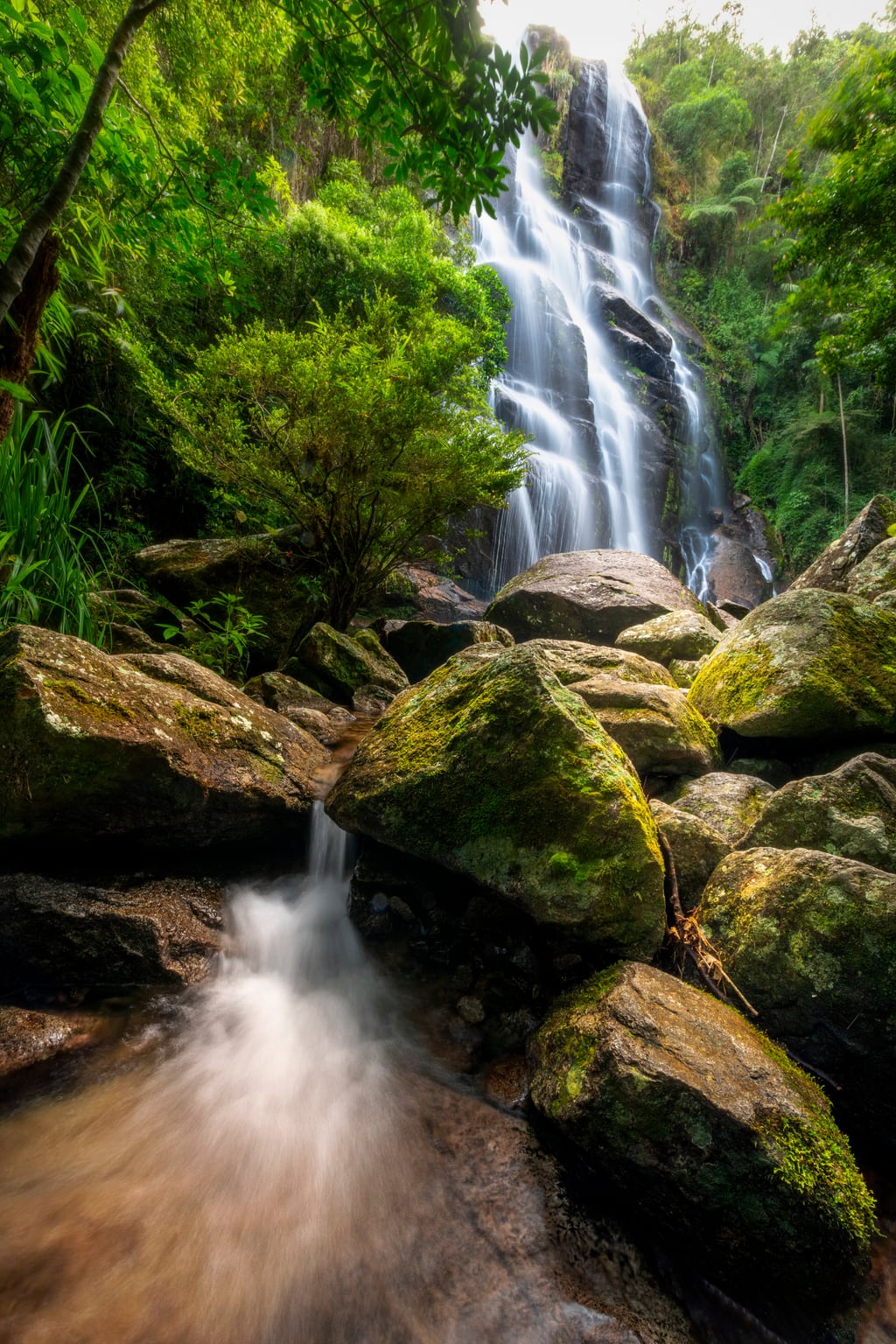
Elsewhere in the park there is a sensory garden with concrete paving, an accessible trail from the Visitor Centre to the food area, a sensory grove with plastic-wood handrails and Braille plates, and — one of only two in the country — video content with Libras interpretation.
Accessibility: Itatiaia also sets its own engineering above the national standard. Where the Brazilian accessibility norm allows gradients up to 8.33% on rough ground, Itatiaia aims for under 3%, with 1% cross-fall, 2.5 m of headroom and a usable width of 95 to 125 cm. That is the difference between a trail that technically complies and one that is actually pleasant to push.
4. Fernando de Noronha: Most Infrastructure, One Live Suspension
Noronha publishes more concrete accessibility detail than any other unit: over 1,500 metres of suspended walkways and accessible or assisted decks; accessible toilets at PIC Sancho, PIC Sueste, PIC Leão and the Visitor Centre; a fully accessible deck and beach ramp at Sueste; and the Trilha do Golfinho built to the national accessibility standard.
Two chair services, with different lead times worth getting right. Julietti all-terrain chairs for natural-surface trails need seven days' notice where monitor support is required — recommended routes are Atalaia, Golfinho-Sancho, Forte São Joaquim and Caieiras. The amphibious beach chair needs only one day.
Accessibility: As of August 2026 the amphibious chair service at Sueste is still flagged suspended on the park’s own site, and its notices page explains why: sea activities at Sueste are suspended, leaving only the sand strip for walking and observing. There is also an unresolved contradiction worth knowing — ICMBio’s national page says the amphibious chair is at Praia do Leão, December to March, while the park’s own site says Sueste and suspended. Two different beaches, and neither page acknowledges the other. Email the park before you build a day around it.
See our Fernando de Noronha guide for the fees, the visitor caps and the rest of the island.
5. Tijuca: On the List, and Currently Closed to You
This is the finding that matters most, because Tijuca sits inside Rio de Janeiro and is the park a visiting wheelchair user is most likely to attempt.
The Caminho Dom Pedro Augusto is a 630-metre trail, built wide, running from the Jardins dos Manacás to the Barracão, with Braille plates on the flora and a guide rope. It is the entry ICMBio lists Tijuca for, and on paper it is exactly right.
Accessibility: But the concessionaire’s own page carries a public notice that the trail will undergo works to recover the conditions that made it accessible — and explicitly advises disabled and reduced-mobility visitors not to use it. The notice is undated, so we cannot tell you when it went up or when it lifts. Until the park says otherwise, do not treat Tijuca as an accessible day out. Check the trail’s page before travelling.
6. The Other Four
Serra dos Órgãos — the longest accessible structure of the eight
The Trilha Suspensa at the Teresópolis entrance runs 1,300 metres, rated leve, about an hour: a timber deck with handrail carried on an early-twentieth-century aqueduct, running through the canopy up to eight metres above the ground, and described by the park as permitting access even to wheelchair users.
Accessibility: Two caveats. The circuit returns by stairs, so a wheelchair user must go out and back rather than round. And the park currently lists only certain stretches as open, which implies the full circuit is not. There is a genuinely thoughtful non-physical provision too: when the car park fills, vehicle entry is restricted to people with reduced mobility — priority access rather than a queue.
Viruá — the quiet standout
Deep in Roraima, and the only one of the eight where ICMBio publishes a hard figure with a difficulty rating. The Passarela da Samaúma runs 230 metres, takes about 15 minutes, and is rated easy, accessible to people with special needs or difficulty moving. It was built by local carpenters through an ARPA-funded project, using timber seized by the environmental agency.
The campsite has three toilets, one of them accessible, and one of its five timber platforms is being adapted. Entry is free, and visits should be booked at least four days ahead.
Chapada dos Veadeiros — the weakest entry
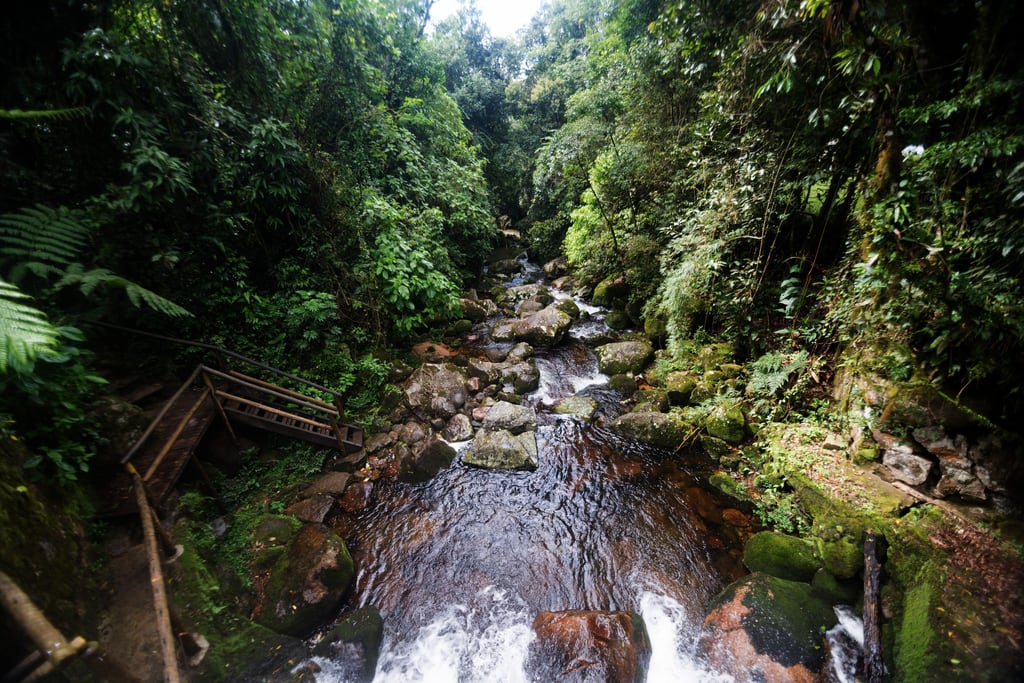
ICMBio describes a walkway to the Corredeiras attraction with accessible internal transport. The concessionaire’s own page is thinner: it offers an internal transport service with an accessible vehicle, with times, routes and prices to be checked at the ticket office — so the accessible transport is a paid extra, bought as a return. At Corredeiras there is a deck, a transport stop and a dry toilet.
Accessibility: Note the wording gap: ICMBio calls the structure a passarela, the operator calls it a deck, and nobody publishes its length, surface or gradient. The only walking route there is an 11 km trail rated above moderate — so the shuttle is not a convenience, it is the whole access. Report it to yourself as shuttle plus deck, not as an accessible trail, and confirm the vehicle is running before you travel.
Araripe-Apodi — a national forest, not a park
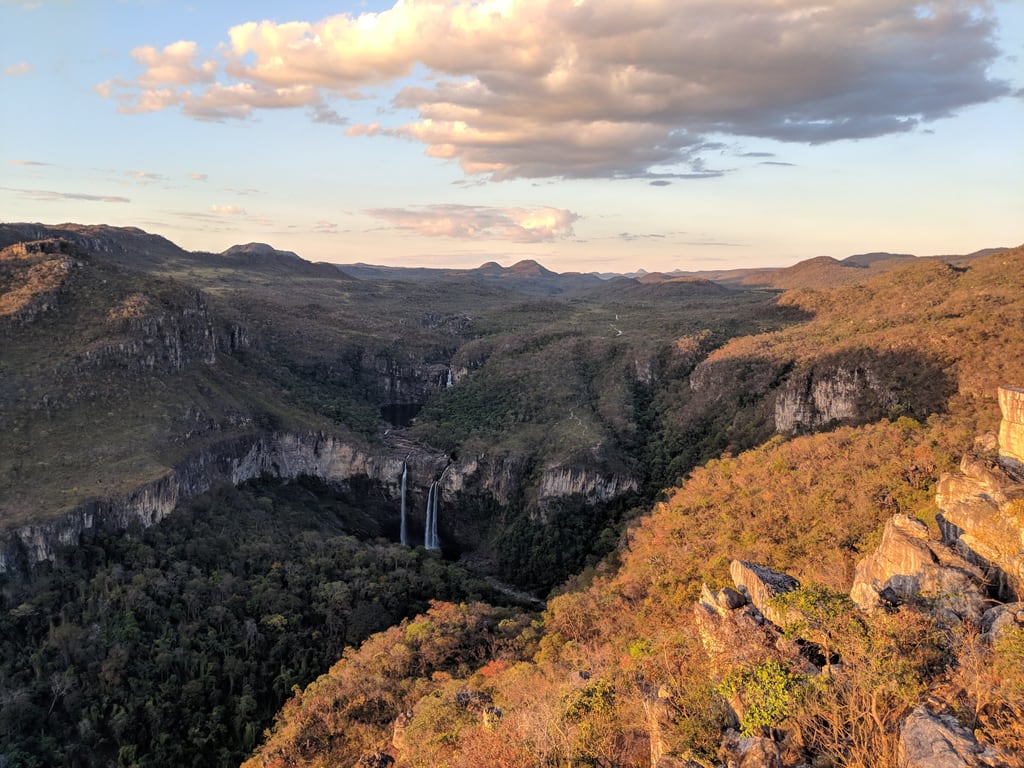
In Ceará, and worth including even though it stretches the title. The Trilha Inclusiva do Belmonte runs 152 metres from the portal to the Mirante do Belmonte, opened in June 2024, with Braille and audio signage, a guide rope, and a QR-code app. The detail comes from the project’s funder rather than the site manager, which publishes nothing about it.
7. What It Costs, and the Half-Price Rule That Mostly Isn’t
There is a federal rule granting half price to disabled visitors and, where needed, a companion. There is also a large hole in it: pricing at concessioned parks is handed to the concession contract, and most of the parks worth visiting are concessioned. Half price is therefore a per-contract matter, not a national right — and the federal free-entry list does not include disabled visitors at all.
| Park | Full | Disabled visitor | Companion |
| Iguaçu | R$134 | No discount at all | None |
| Chapada dos Veadeiros | R$49 | R$24.50 | Half price, published |
| Itatiaia (lower section) | R$46 | R$23 | Not published |
| Serra dos Órgãos | Free (stated as temporary) | Free | Free |
| Viruá | Free | — | — |
| Fernando de Noronha | R$384 / R$192 Brazilians | No discount | None |
| Tijuca — Corcovado train | R$134 | R$107 | Not published |
Two details that matter more than the numbers. Iguaçu states outright that it has no half-price and no additional discounts, on the grounds that the meia-entrada laws cover cinemas, theatres and entertainment events and do not apply to federal parks; its exemption list contains no disability category. And Itatiaia’s proof standard is restrictive — it asks for a BPC benefit card or an INSS document, and BPC is means-tested, so a disabled visitor who is not low-income may not qualify at all.
8. What “Accessible” Is Measured Against
The technical standard is ABNT NBR 9050:2020. A practical guide hosted by ICMBio — the product of a master’s dissertation at the Rio de Janeiro Botanical Garden’s school, rather than an ICMBio norm — sets out the figures that matter on a trail: handrails at 0.70 m and 0.92 m, a minimum usable width of 1.20 m, a 5 cm edge kerb, a longitudinal gradient ideally at or under 5% and up to 8.33% on rough terrain, with rest landings every 50 metres.
The policy direction is moving, slowly. A national law enacted in July 2025 created a policy for encouraging visitation to conservation units, and made accessibility for people with disabilities or reduced mobility a formal directive of it. It is a directive rather than a funded target — but it is on the statute book, and it arrived two weeks after ICMBio published these accessibility pages.
For the baseline, ICMBio’s own journal published a survey in 2021: questionnaires went to 140 federal units, 70 replied, and only about a third reported any accessibility initiative at all — with the authors finding those initiatives fragmented and demand-driven rather than institutionally planned. That study is the best answer to the obvious question of why the showcase is only eight units long.
Frequently Asked Questions About Accessible Parks in Brazil
Which Brazilian national parks are wheelchair accessible?
ICMBio showcases eight federal conservation units: Itatiaia, Tijuca, Serra dos Órgãos, Viruá, Chapada dos Veadeiros, Iguaçu, Fernando de Noronha and the Araripe-Apodi national forest. It is a showcase rather than a complete register — the same page illustrates Serra da Canastra without listing it.
Which is the most accessible national park in Brazil?
Iguaçu, by a clear margin. Free wheelchair loan at the Visitor Centre and Porto Canoas, adapted internal buses with a staffed boarding platform, ramps and lifts to the main viewpoints and the Garganta do Diabo walkway, accessible toilets at every support structure, hand-bike hire, Braille menus and ear defenders for autistic visitors.
Is there a Brazilian national park with an accessible waterfall?
Yes — Cachoeira Camapuã in Itatiaia National Park, opened in March 2025 as the first accessible waterfall in Rio de Janeiro state. It combines ground works, handrails and a plastic-wood ramp that takes a wheelchair user into the water, with an amphibious chair available by advance reservation.
Do people with disabilities get free entry to Brazilian national parks?
No. A federal rule grants half price to a disabled visitor and, where needed, a companion, but pricing at concessioned parks is set by the concession contract, so it varies. Iguaçu states outright that it offers no discount; Chapada dos Veadeiros publishes half price for both visitor and companion; Itatiaia offers half price but asks for means-tested benefit documentation.
Is Tijuca National Park accessible?
Not at the moment. Its 630 m Caminho Dom Pedro Augusto is the trail ICMBio lists it for, but the concessionaire has posted a notice that works will recover the conditions that made the trail accessible, and advises disabled and reduced-mobility visitors not to use it. The notice is undated — check the trail’s own page before travelling.
Conclusion
Eight units out of 344 is not a good number, and the honest version is slightly worse: one of the eight is currently warning wheelchair users off its flagship trail, another sells its accessibility as a paid shuttle with no published gradient, and only two units in the entire federal system offer anything for deaf visitors.
But the good ones are genuinely good. Iguaçu is a full day out with the equipment, staff and honesty to back it. Itatiaia has built something that did not exist in Brazil before. Noronha publishes more detail than most European parks. Those are worth planning a trip around, and they are worth naming precisely so that the rest of the system has something to be measured against.
Planning around access needs is what we do, and it means checking the current state of a trail rather than trusting a list. Tell us where you want to go and we will find out what is actually running — see our tours or get in touch. You may also want our guides to wheelchair accessible travel in Brazil and the most accessible beaches in Brazil.
Image credits: Miguelsjacob, João D’Andretta, Marcio Metello, Cesar Vieira (CC BY-SA 4.0); Renan Siqueira Teixeira, Luiz.A.G.Rolim (CC BY-SA 3.0); MTur Destinos (public domain), via Wikimedia Commons.
 English
 Portuguese
  Español
  Français
  Deutsch
  Italiano