

Brazil is more accessible than its reputation suggests, but unevenly. The Inclusion Law requires existing hotels to provide accessible rooms and guarantees a companion seat at venues; Iguaçu Falls has a genuinely accessible route with a free wheelchair loan; and the Rio and São Paulo metros have lifts at essentially every station a visitor would use. The major exception right now is Christ the Redeemer, where the summit escalators went out of service on 3 August 2026 for works expected to run to about May 2027.
This guide covers what is documented and verifiable. Where we could not verify something — and there are several important cases — we say so rather than guessing, because in accessible travel a confident wrong answer is worse than no answer at all. Being told a cable car is step-free and finding stairs is not an inconvenience; it is a trip ruined at the base of a mountain.
1. The Law, and What It Actually Guarantees
The Lei Brasileira de Inclusão (Lei nº 13.146), the Statute of the Person with Disabilities, was enacted on 6 July 2015 and — under its Article 127 — came into force 180 days later, in early January 2016. It is a genuinely strong piece of legislation, and knowing what it does and does not promise saves arguments.
Hotels: the 10% rule, and its 2024 exemption
Article 45 requires hotels, pousadas and similar businesses to be built to universal design principles. For properties that already existed, paragraph 1 requires at least 10% of rooms to be accessible, with a minimum of one, and paragraph 2 requires those rooms to sit on accessible routes — not down a step at the end of a corridor.
Accessibility: There is a catch worth knowing before you argue with a hotel. In 2024, Lei nº 14.978 added a third paragraph allowing an existing property that cannot meet the percentage for structural reasons to be exempted, provided it holds a technical structural report, renewed every five years. So 10% is the rule, not a guarantee. Always confirm the specific room, not the policy.
What “accessible room” is allowed to mean
This is the nuance that decides whether a booking works. Decreto 9.296/2018 regulates Article 45, and it splits accessible rooms into two annexes: Anexo I rooms are built accessible — turning space, a level-entry shower, the lot — while Anexo II rooms are ordinary rooms fitted with aids. Both count toward a hotel’s quota.
Accessibility: So ask which one you are being sold. “We have adapted rooms” can lawfully mean grab bars and a flashing doorbell rather than a roll-in shower. Note too that the decree carves out micro and small businesses pending separate regulation — which covers most pousadas.
The technical standard, and a detail that matters this year
ABNT NBR 9050 is the technical standard the law leans on; the current edition is NBR 9050:2020, confirmed still in force at the end of 2025. It sets no room percentage — that comes from the legislation — but it does give you numbers worth quoting when you phone a hotel: a clear door opening of at least 0.80 m, a shower floor level with the adjacent floor, a shower box of at least 0.90 × 0.95 m, a bed height of 0.46 m, a 1.50 m turning circle and a 0.90 m circulation strip.
One provision is unexpectedly topical: Emenda 1 to the standard removed escalators as a valid accessible route. Keep that in mind when you read the Corcovado section below.
What the law does not give you
Article 44 covers theatres, cinemas, stadiums, auditoriums and conference venues. Two paragraphs matter to travellers, and one of them is routinely misreported.
| Provision | What it actually says |
| Art. 44 §3 | Reserved spaces and seats must be located so as to accommodate at least one companion. |
| Art. 44 §7 | A disabled visitor’s ticket may not cost more than anyone else’s. This is price parity — it is not a discount and it is not free entry. |
| Art. 47 §1 | Accessible parking: 2% of spaces, minimum one. |
| Art. 51 | 10% of taxi fleets must be accessible, and operators may not charge a disabled passenger extra. |
| Art. 52 | Car rental firms must offer one adapted vehicle per 20 in the fleet. |
| Art. 49 | Charter and tourism coach operators must comply as fleets are renewed — a gradual obligation, not an immediate one. |
There is a separate half-price law — Lei 12.933/2013 — which grants meia-entrada to a disabled person and, where necessary, a companion, capped at 40% of tickets. But read what it covers: cinemas, cineclubs, theatres, musical and circus performances, and educational, sporting, leisure and entertainment events. Tourist attractions are not on that list. Iguaçu National Park states outright that it offers no meia-entrada. Some sights do offer concessions — Sugarloaf does — but they choose to.
2. Christ the Redeemer: Read This Before You Book
This is the most important thing in this guide, and it is temporary, so check the date on anything else you read.
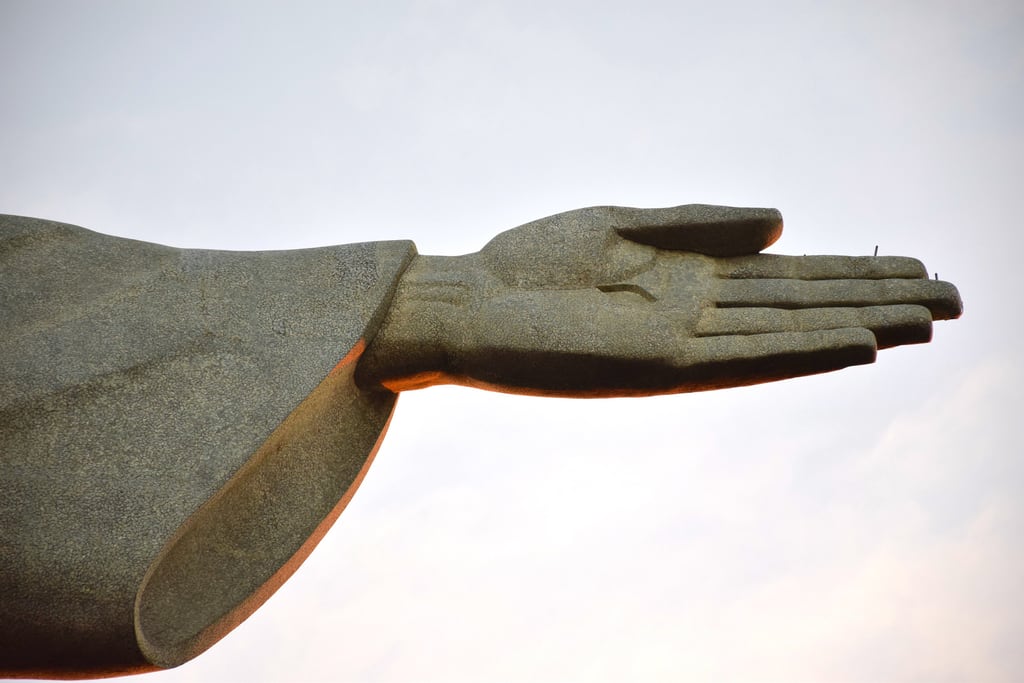
The escalators at the summit were switched off on 3 August 2026, with works forecast to finish around the end of May 2027. The site stays open, but with a fifty per cent reduction in the maximum number of simultaneous visitors on the upper Corcovado for the duration.
How you reach the statue now
The lifts still run, but only as far as the second floor. From the upper lift hall, access to the monument plateau is by the stone stairways only — about 80 steps, seven to eight minutes on the way up.
To cover that gap, stair-climbing cars and stair-climbing chairs operate from the ICMBio visitor centre on the same second floor. The cars take up to 150 kg and the chairs up to 130 kg. They carry standard-model wheelchairs only, and a companion needs to assist with transfers. Standard wheelchairs are available on loan.
Accessibility: The single most important line on the official page: the stair-climbing cars and chairs do not operate on a wet floor or in rain. Corcovado sits in a rainforest microclimate at the top of a mountain, and it rains often. Build in a spare day, go early, and have a plan for being turned back — because during these works that is a real possibility, not a remote one.
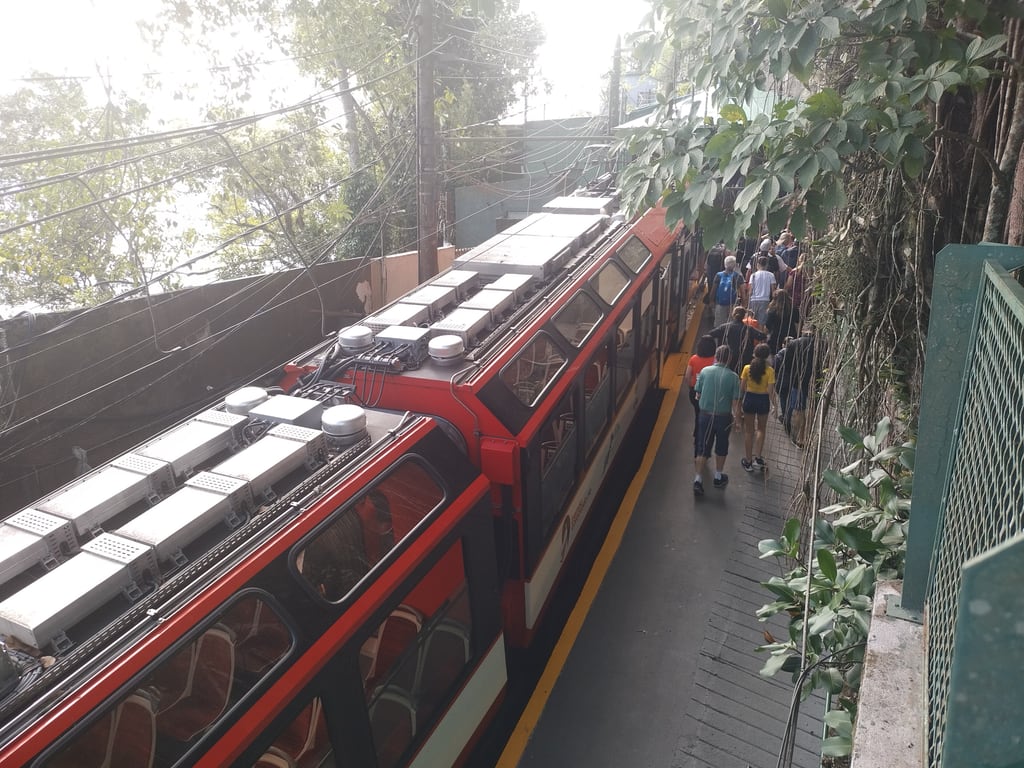
We were not able to verify whether the rack railway carriages themselves take a wheelchair, or whether an official van alternative exists. Both are worth asking about directly when you book rather than assuming either way.
3. Sugarloaf: Better Than You Would Expect
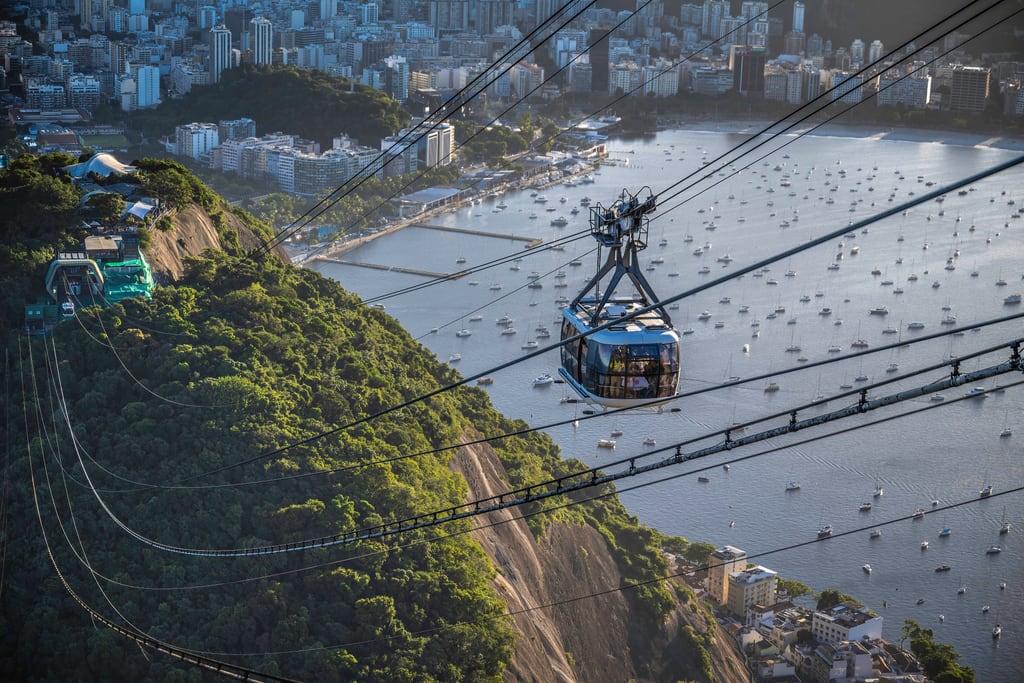
Rio’s other great viewpoint is in far better shape than Corcovado, and its provision is properly documented. There are lifts and platforms at all three levels — two at the Praia Vermelha base station, three at Morro da Urca and three at Pão de Açúcar itself — plus the Plano Inclinado, an inclined lift installed at Morro da Urca in 2016, and the Via Verde ecological route.
On tickets, Sugarloaf does what the law does not require: it offers half price to a disabled visitor and their companion.
Accessibility: Two real caveats. There is only one wheelchair per station, available on request and subject to availability — so this is not something to depend on at a busy hour. And two attractions on the site are not accessible: the Cápsula do Tempo at Morro da Urca and the Restaurante Clássico at the summit. We also could not confirm whether the cable car cabins can be boarded without transferring out of your own chair, which is worth asking before you buy.
4. Iguaçu Falls: The Most Genuinely Accessible Big Sight
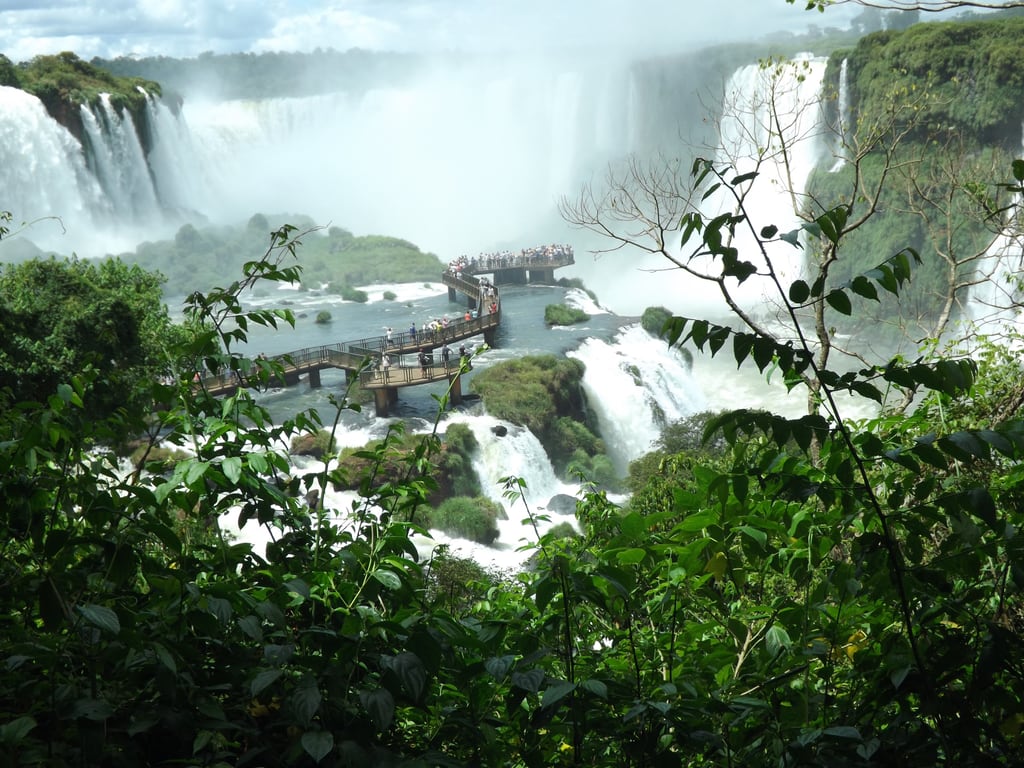
Iguaçu is the one headline natural attraction in Brazil we would send a wheelchair user to without hesitation — provided you take the right route, which is not the famous one.
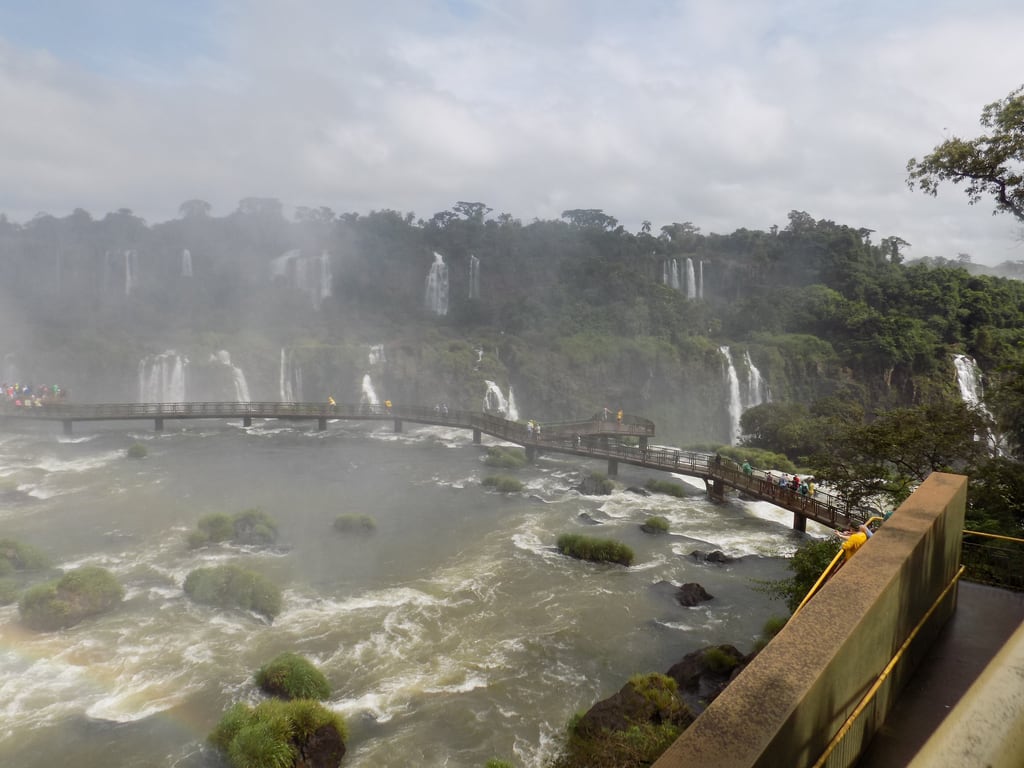
The park says plainly that the main 1 km Cataratas trail is not recommended for wheelchair users, because of the stairways along it. That honesty is a good sign, and it is the opposite of what most attractions do.
The accessible route
- Free wheelchair loan. Conventional wheelchairs are provided free of charge — just ask at the Visitor Centre.
- Take the internal bus to the final stop, Porto Canoas. That is the accessible way in.
- At Porto Canoas there is a viewpoint and a panoramic lift giving access to the walkway — the lift at the Devil’s Throat end of the falls.
- A second accessible stop sits in front of the hotel and gives you the first viewpoint on the trail.
ICMBio’s own accessibility pages go further, listing adapted buses, wheelchair loan at both the visitor centre and Porto Canoas, handbikes and tandem bikes, accessible toilets at all support structures, ramps to the main attractions including the Garganta do Diabo, and ramped sections on the Poço Preto and Bananeiras trails.
Accessibility: For context on how unusual that is: ICMBio showcases eight federal conservation units with accessible infrastructure — out of 344 it manages. Iguaçu is one of them, alongside Itatiaia, Serra dos Órgãos, Viruá, Chapada dos Veadeiros, Fernando de Noronha, Araripe-Apodi and Tijuca. We have since gone through all eight in detail in our guide to accessible national parks in Brazil, including one important caveat: Tijuca’s 630-metre Caminho Dom Pedro Augusto, the trail it is listed for, currently carries a notice from the concessionaire advising disabled and reduced-mobility visitors not to use it while works restore its accessibility.
4. Getting Around: The Metros Are the Good News
Brazilian pavements are frequently poor — uneven, interrupted by driveways and street trading, and in historic centres surfaced with cobbles that defeat most wheels. The metros are a different story entirely, and they are the reason a city trip can work.
São Paulo
The Metro publishes a full station-by-station access document, and on the four lines it operates directly the coverage is complete: every station on Line 1-Azul (23 stations), Line 2-Verde (14), Line 3-Vermelha (18) and Line 15-Prata (11) is listed with both street-to-station and station-to-platform access. Platform access is by lift at essentially every station; street access is a mix of ramps, lifts, level entry and inclined platform lifts.
Two caveats the Metro itself flags: three lifts are not its own equipment — one at Santa Cruz belongs to the shopping centre, two at Jabaquara to the bus terminals — so they follow third-party hours. Lines 4-Amarela and 5-Lilás are concession-run and covered separately; the concessionaire states all their stations are accessible, and both lines have platform screen doors, which removes the platform gap entirely. On this measure São Paulo is materially better than Rio.
Rio de Janeiro
MetrôRio has lifts at the stations that matter most to visitors — Jardim Oceânico in Barra, São Conrado, and the whole Zona Sul run: Nossa Senhora da Paz, General Osório, Cantagalo, Siqueira Campos, Cardeal Arcoverde, Botafogo, Largo do Machado, Catete, Glória and Cinelândia, plus Uruguaiana, Central-area stations and Maracanã. Ramps at a maximum 8.33% gradient serve a further list including Flamengo, Carioca and Saens Peña.
Across Lines 1, 2 and 4 there is tactile paving, Braille at stair entrances and exits, Braille station maps, wheelchair position markings on platforms and priority seating indicators.
Accessibility: Ignore the free-travel schemes. Both cities offer disabled residents free public transport — Rio through the Vale Social card, São Paulo through the Bilhete Único Especial — but both are residency-bound in practice. Rio’s requires a CPF, a Brazilian address and a medical assessment at a public health unit; São Paulo’s is limited to residents of the city, its metropolitan region and three named towns. A visiting wheelchair user pays the standard fare on both systems. No rule bars foreigners; the application route simply cannot be completed by one.
Rio’s VLT tram through the city centre and port area states that all its stations are accessible, which makes it a useful complement to the metro for the Praça Mauá and Centro museums. One practical caution for both cities: where a station has several street entrances, they are not all necessarily step-free — the accessible one may be a block away, so check which entrance you want before you surface.
Flying
Domestic air travel runs on ANAC Resolução 280/2013. It requires priority service; asks for 72 hours' notice where a companion or medical documentation is involved and 48 hours otherwise — while stating explicitly that a failure to give notice must not prevent carriage; carries one mobility aid free of charge, in the cabin if space allows; and requires new aircraft with 100 or more seats to carry an onboard wheelchair. Powered chairs are coded by battery type, so tell the airline which you have.
Two provisions are worth knowing by heart. Staff may not carry you manually except in an emergency evacuation — boarding is by jet bridge, ambilift or ramp, and the airport operator has to provide that equipment. And if your wheelchair is damaged or lost, the airline must arrange an equivalent replacement at the aircraft door: non-return within 48 hours counts as loss, indemnity is due at market value within 14 days, and a loaner stays with you for 15 days after that.
Accessibility: One route-specific trap. Azul’s regional subsidiary, Azul Conecta, states that passengers who need ascent or descent equipment to board cannot be carried at all, and that boarding assistance is unavailable. Conecta operates a lot of regional routes, so this can break an itinerary silently — check the operating carrier, not just the airline on the ticket.
6. Beaches, Parks and Islands
Brazil’s adapted beach network is genuinely good and genuinely seasonal, and it deserves its own treatment — we have written that up separately in Most Accessible Beaches in Brazil. The short version: the Northeast runs year-round, while Rio and the São Paulo coast operate summer seasons and are dormant much of the year.
Among the national parks, Fernando de Noronha publishes the most detailed accessibility information of any protected area we looked at — over 1,500 metres of accessible decks and walkways, accessible toilets at four locations, a trail built to the national accessibility standard, and all-terrain trail wheelchairs bookable seven days ahead. Our Fernando de Noronha guide covers what works and what is currently suspended.
In Bonito, accessibility is concentrated in the river bathing parks rather than the signature caves and floats, and because agencies rather than attractions control the booking slots, stating your requirements at the point of booking genuinely changes what you are offered. See our Bonito guide.

7. The Honest Limits
One statistic frames everything else. Brazil’s 2022 census asked, block by block, whether a street had a dropped kerb for wheelchair access. Only 15.2% of urban residents — 26.5 million out of 174.2 million — live on a street that has one. Only 18.8% live on a street with an obstacle-free pavement. In 157 municipalities not a single resident lived on a street with a ramp, and in no municipality in the country did all of them. Ramps were present outside just 47.2% of health establishments and 31.8% of educational ones.
You will often see this reported as “119.9 million people, 68.8%, live on streets without a ramp”. That figure counts only people who have a pavement but no ramp; it quietly leaves out the 27.8 million who have no pavement at all. The real share without a ramp is 84.8%. Both big cities sit close to the national average — 16.6% of São Paulo residents and 16.4% of Rio residents live on a street with a ramp.
That is the context in which the metros and Iguaçu look as good as they do. The destinations are often fine; the country between them is the problem.
- Historic centres are hard, and legitimately so. IPHAN’s rules allow accessibility works in listed areas but assess each case against the risk to heritage value and structural integrity, which makes retrofits slow and partial. Salvador’s Pelourinho does have a real one — Rua Gregório de Matos was widened from 0.60 m to 1.50 m in works running 2012–2013 — but the steeper streets remain difficult and most commercial premises are still inaccessible. Tiradentes has essentially no usable pavements; Ouro Preto’s municipal answer is an adapted van rather than paving.
- Pavements are the weak link. A venue can be perfectly accessible while the two hundred metres leading to it are not. Budget for taxis over walking.
- Do not count on a ramp-equipped ride-hailing car. Uber lists a wheelchair-accessible vehicle option in its global catalogue, but the Brazilian product page returns a 404, the option appears on neither the São Paulo nor the Rio city page, and Uber’s Brazilian accessibility page links out to the US. 99 lists no accessibility category at all. Plan on a standard car with a folding chair in the boot. São Paulo does have a licensed “Acessível” taxi category at standard fares, but there is no single booking app or dispatch number for it.
- Obligations phase in. Coach operators comply as fleets renew, so an accessible intercity coach is not something you can assume.
- Websites are unreliable. In researching this guide, one major attraction’s site served its homepage for every accessibility URL, and a national programme’s site returned nothing but a header. Phone, or better, WhatsApp.
- Verify the specific thing, not the policy. A hotel with an accessible-rooms policy may have one room, already booked, an Anexo II fit-out or a structural exemption. Ask about the room, and ask for photographs.
- Enforcement is patchy but real. In one documented case a Pernambuco hotel that confirmed an accessible booking and then failed to provide a shower bench and bath chair was ordered to pay R$10,000 in moral damages, upheld on appeal. Your rights are enforceable — but enforcing them is not a holiday.
A note on how we sourced this. Several official sites gave up nothing at all — one national programme’s site returned only a page header, and a number of government domains were simply unreachable. Brazil is also in an electoral period, during which state and municipal portals have removed older news, so a missing page is not proof that a service has closed. Where we could not confirm something, we have said so above rather than filling the gap.
Frequently Asked Questions About Accessible Travel in Brazil
Is Christ the Redeemer wheelchair accessible?
Partly, and it is harder than usual right now. The summit escalators were switched off on 3 August 2026 for works expected to run to about May 2027. Lifts reach the second floor only; from there it is roughly 80 stone steps, covered by stair-climbing cars (up to 150 kg) and chairs (up to 130 kg) from the ICMBio visitor centre. Crucially, that equipment does not operate in rain or on a wet floor.
Are Brazilian hotels required to have accessible rooms?
Yes. Article 45 of the Inclusion Law requires existing hotels to provide at least 10% accessible rooms, minimum one, located on accessible routes. But a 2024 amendment lets a property be exempted from the percentage on structural grounds with a technical report renewed every five years — so confirm the actual room rather than relying on the rule.
Do people with disabilities get free entry to attractions in Brazil?
Not as a national rule. The Inclusion Law guarantees that a disabled visitor’s ticket cannot cost more than anyone else’s, and that reserved seating accommodates a companion — price parity, not a discount. Free or reduced entry schemes exist, but they are municipal or venue-by-venue.
Is the Rio metro wheelchair accessible?
Largely yes, and it is the easiest way to move around the city. Lifts serve the tourist-relevant stations across Barra, São Conrado and the whole Zona Sul, with ramps at others, plus tactile paving, Braille signage and platform wheelchair markings on Lines 1, 2 and 4.
Which is the most accessible major attraction in Brazil?
Iguaçu Falls on the Brazilian side. It offers free wheelchair loan at the Visitor Centre, an accessible route via the internal bus to Porto Canoas, and a panoramic lift to the walkway — and the park is honest that the main 1 km trail, with its stairways, is not the route to take.
Conclusion
The picture in Brazil is genuinely mixed, and the mix is not where people expect. The metros are excellent. Iguaçu is excellent and honest about its own limits. The beach programmes are real, free and well staffed. The law is strong, if softer than it first appears. What lets the country down is the connective tissue — pavements, information, and the gap between a policy and the specific room, bus or lift you actually need.
So plan the specifics rather than the destination, confirm by WhatsApp rather than website, and build slack into the days that depend on one piece of equipment working. Right now Corcovado is exactly such a day.
This is the whole of what we do — we are an accessible travel operator, and checking these details in advance is the job, not an extra. Tell us what you need and we will build the trip around what is actually working when you travel: see our tours, browse destinations or get in touch.
Image credits: Thaismay, Mayra Villas Boas Francisco Zamulko (CC BY-SA 4.0); Renan Siqueira Teixeira, Giovanni Pinheiro (CC BY-SA 3.0); Geogast (CC BY 4.0); Wilfredor (CC0), via Wikimedia Commons.
 English
 Portuguese
  Español
  Français
  Deutsch
  Italiano